Schedule a FREE Estimate | Paver Sealing | Paver Cleaning and Restoration | Pressure Washing
Travertine and Natural Stone Sealing in Southwest Florida
Sealing pavers in Southwest Florida protects the surface from UV, summer rain, salt air and iron-stained irrigation water, and it locks the joint sand in place so the paving stays tight. It does not repair a hazy, stained or sunken surface, and it should never go over efflorescence or dirt. Before we recommend a sealer, we work out whether your pavers need sealing at all, or a wash, or re-sanding first. Then we do the work in the right order. Spotless Solution LLC is owner operated, based in Cape Coral, and on-site estimates are free. Call 239-341-9788.

What Paver Sealing actually involves
Sealing is a sequence of steps, and the sealer is only the last one. Most failed seal jobs fail at an earlier step.
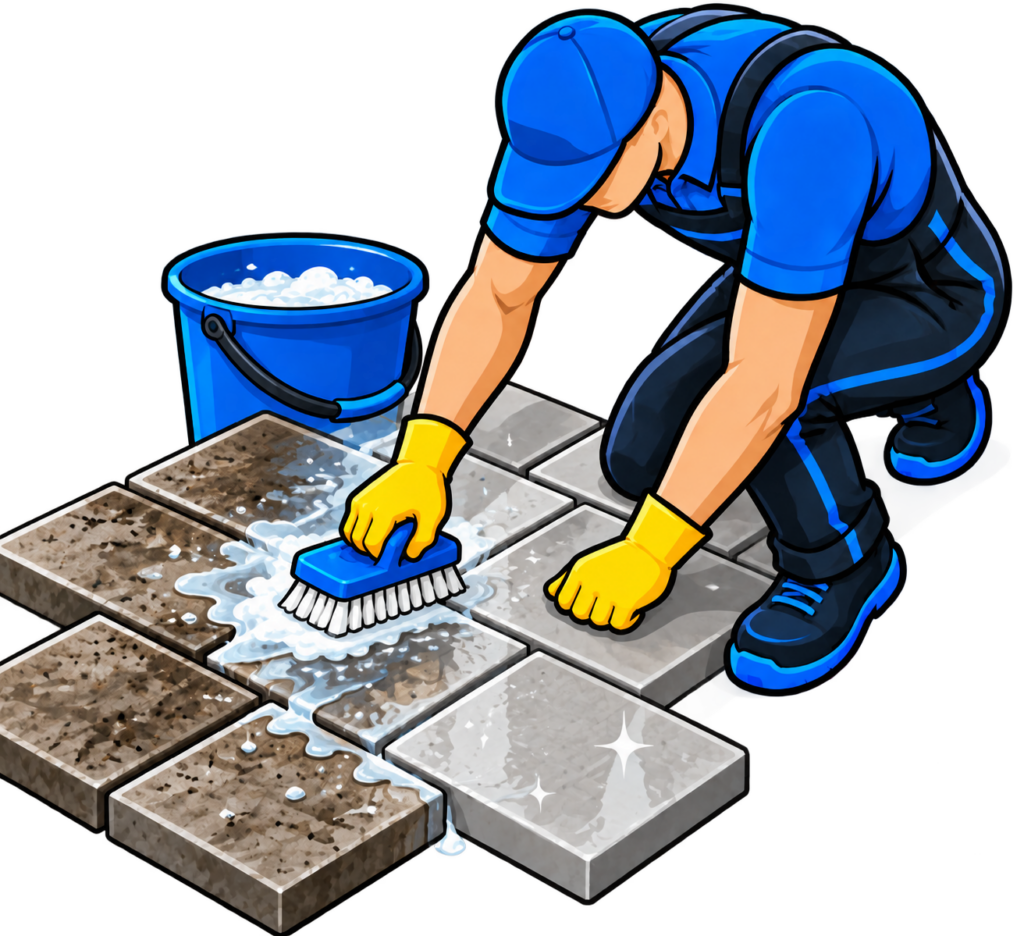
Cleaning so the sealer can bond
Sealer bonds to clean, open pores. Algae, mildew, oil, rust and old failed sealer all sit between the product and the paver, and whatever is under the sealer gets locked in. Cleaning has to match the material, because concrete pavers, clay pavers and travertine tolerate very different treatments. Too much force strips the joint sand and etches the face of the paver, which is why cleaning is a skilled step and not a rinse.
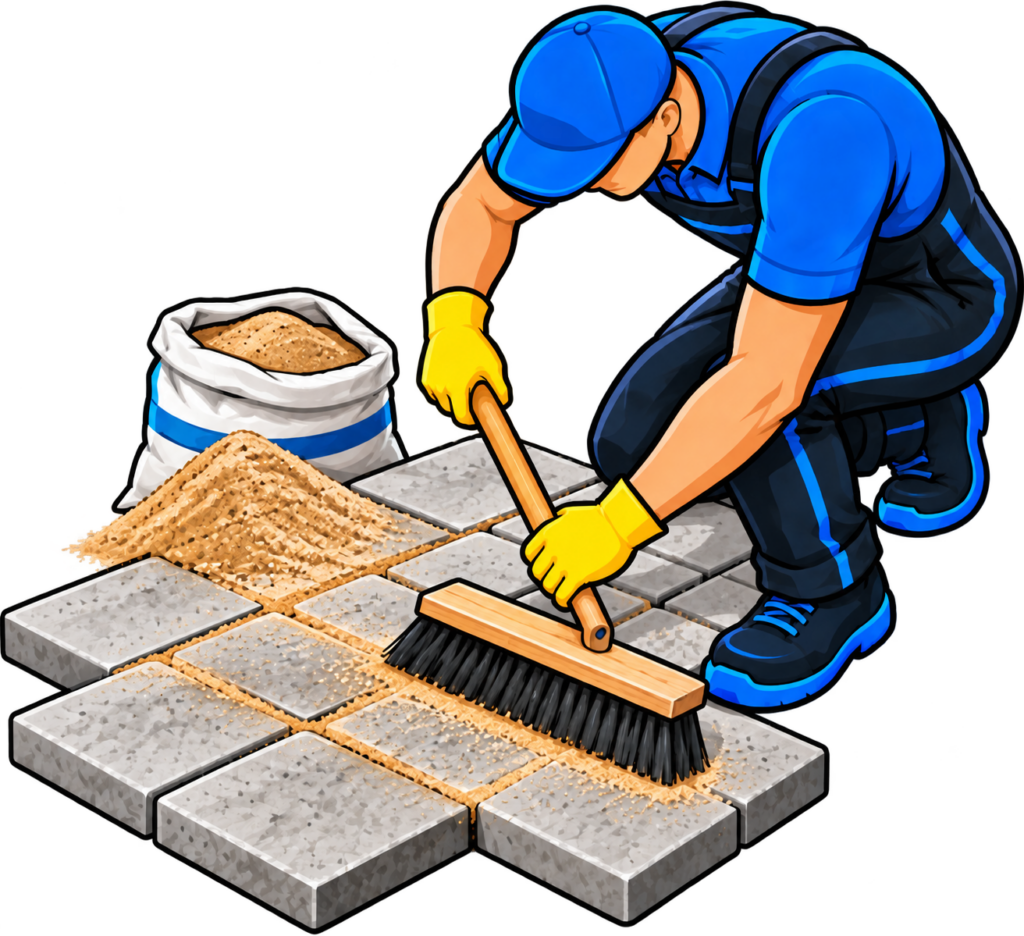
Stabilizing the joint sand
Joint sand is what holds a paver surface together. It transfers load between pavers, stops them shifting and blocks weeds and ants. In Southwest Florida, heavy rain and cleaning wash regular sand out of the joints, and once the joints open, pavers rock, edges chip and weeds root.
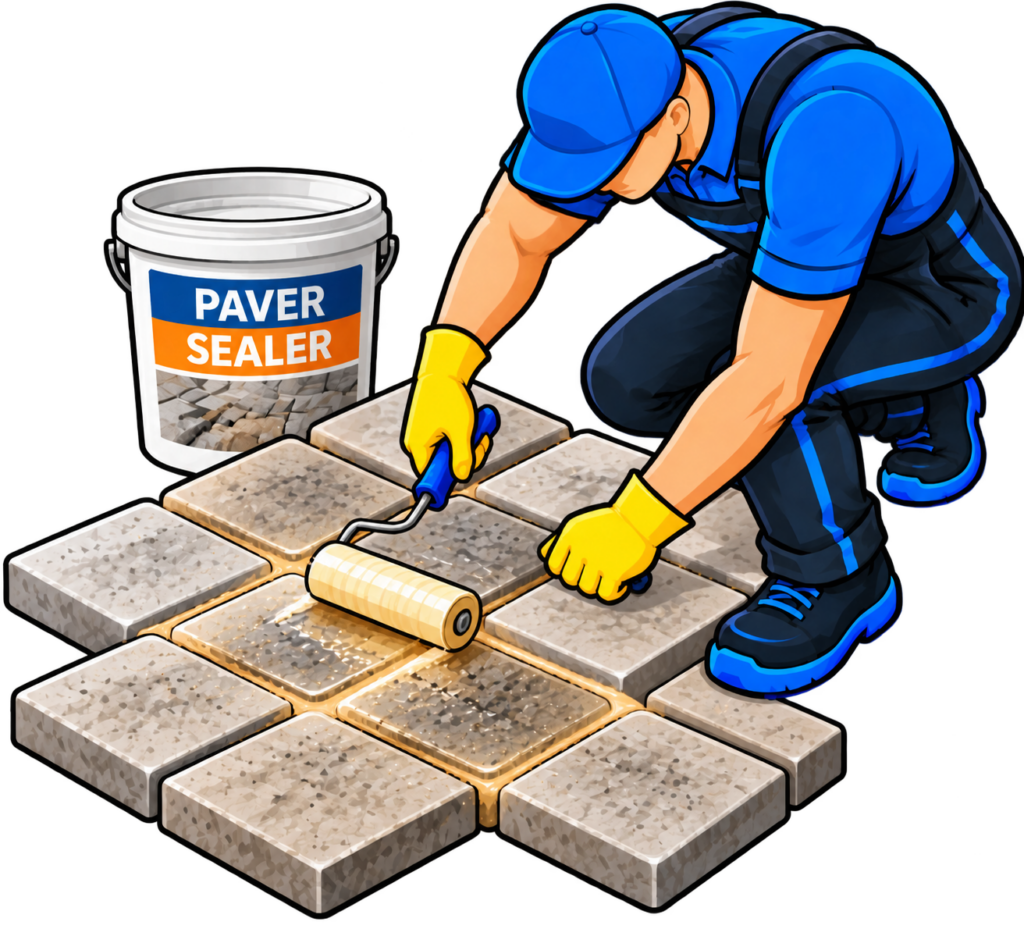
Applying the sealer within its window
Sealers are chemical products with real application limits: surface temperature, moisture in the paver, humidity and the time they need before rain. On a very hot paver some products dry too fast and leave streaks or bubbles. Over a damp paver they can turn cloudy. That is why we schedule around the weather and not around the calendar.
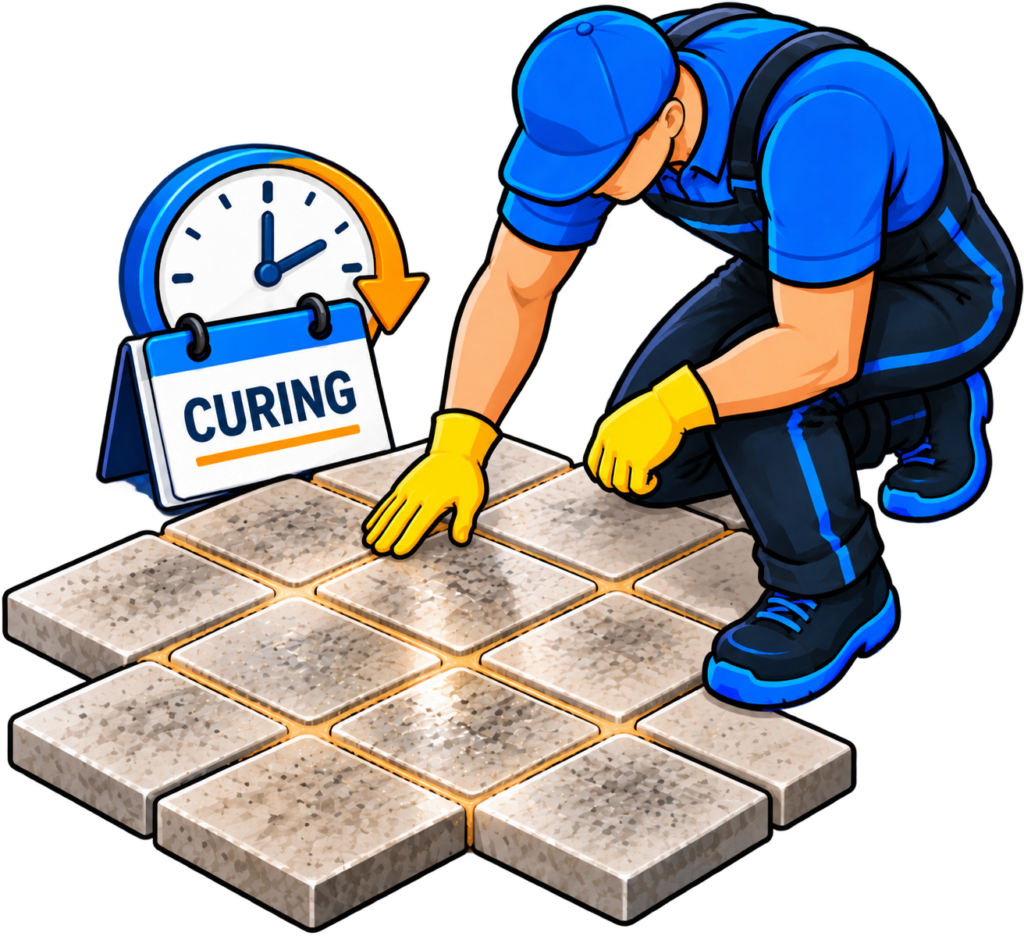
Curing
Efflorescence: the honest version
What it is. The white, chalky haze on pavers is not dirt. Cement-based pavers and the bedding under them contain soluble salts and lime. When water moves up through the paver and evaporates at the surface, it leaves those minerals behind as a white deposit.
Why does it happen here? A high water table, daily summer rain, sprinklers that soak pavers from the edges and humid air that slows drying all feed it. New pavers are the worst, because they keep releasing salts for months.
Why it matters for sealing. It has to be treated, and the pavers given time to stop producing it, before any sealer goes on. Sealer over efflorescence traps moisture and salts under the film. The result is a cloudy, whitish or blotchy surface that can be permanent, and a sealer that may bubble or peel. A contractor who seals over it is storing up a problem, and you are the one who lives with it.
If your pavers are still venting, we will tell you to wait, even though that pushes the job back. We also look at drainage and irrigation, because efflorescence returns if moisture keeps reaching the pavers from below.
When it is the right answer and when it is not
Sealing is the right spend for a particular kind of surface. For others it is the wrong one, and we would rather tell you that on your driveway than after the invoice.
Sealing makes sense when:
- The pavers are sound and level, with no active efflorescence.
- The joints are full and firm, or can be re-sanded and stabilized as part of the job.
- The surface is clean, or can be cleaned properly, and any stains are treatable.
- You want deeper color, easier cleaning and protection from UV fading and iron stains from irrigation.
Do something else first when:
The surface is just dirty or green
There is white haze, or it keeps coming back
Joints are empty or pavers have sunk, cracked or rock underfoot.
Old sealer is peeling, cloudy or yellowed
There are rust or dark irrigation stains
The pavers are new
They may still be releasing salts. We will advise on timing after seeing them.
Sealing slows damage and makes cleaning easier. It will not stop pavers settling, and it will not keep a surface looking good without maintenance. It is worth doing when the surface is ready for it.
Reviews From Happy Homeowners
Our customers share their experience with quality workmanship, honest recommendations, and lasting exterior improvements.
How we do the work
1
Free on-site estimate
We look at the pavers, check for efflorescence, stains, joint condition and drainage, and tell you what the surface needs, including when that is not sealing. You get a clear scope and price.
2
Cleaning and treatment
The surface is cleaned to suit the material, and stains or efflorescence are treated.
3
Repairs and re-sanding
Low or empty joints are refilled so the paving is locked in.
4
Drying
Pavers must be dry through, not just on top. In dry weather that can be a day. In the wet season it can be longer, and we do not seal a paver that reads wet.
5
Joint stabilization and sealing
The joints are stabilized, then the sealer goes on in the coats the product and the surface call for.
6
Cure and walk-through
We give you the walking, furniture and parking window for the product used, and advice on caring for your surface.
A typical driveway or lanai takes about two days from first wash to final coat, with drying time between. Repairs, old sealer removal or efflorescence treatment add time, and pool decks and larger properties take longer. In the summer rainy season, afternoon storms mean early starts and sometimes a coat is moved to another day.
What the choice means for how long it holds
Southwest Florida is hard on sealer. In full sun, film-forming sealers on driveways often need attention roughly every two to four years, and penetrating products can run longer, though neither is guaranteed. Shade extends the interval. South-facing driveways, pool decks and waterfront properties shorten it. The product, the number of coats, traffic, irrigation and how the surface is maintained all move the number. A schedule that works in Ohio does not work here.
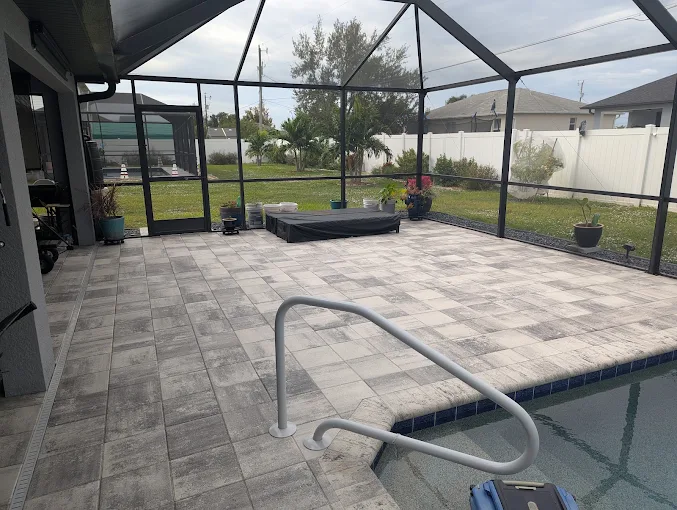
Products and what actually differs between them
The right choice depends on the paver, the exposure and the look you want.
| Type | What it does | What to watch |
|---|---|---|
| Penetrating | Soaks into the paver and leaves no surface film. Natural look, little color change, and nothing to peel. | Less color depth and less sheen. Offers less protection against oil and some stains. |
| Film-forming | Builds a layer on top. Deepens color, adds satin to high gloss, and resists stains well. | Shows wear over time, can turn cloudy if moisture is trapped, and can be slick when wet. Some soft films pick up hot tire marks on driveways. |
| Solvent-based | Richer, deeper color and strong penetration into dry pavers. | Strong odor, needs a truly dry surface, and is less forgiving around plants and pool areas. |
| Water-based | Low odor and easier around landscaping. Suits some shaded or enclosed areas. | Usually less depth of color, and rain during cure can cloud some products. |
Joint sand stabilization sits alongside whichever sealer you choose. A well-sealed face over open joints still fails, because the paving moves.
Pool decks and wet areas
On lanais, pool decks and other wet surfaces, the finish affects traction. A glossy film can be slick when wet. Lower-gloss finishes and traction additives change how a surface behaves, but none of them removes the need for care around water. We go through the options with you so you know what each one does and does not do.
What it costs
Sealing is priced by the square foot, and the sealing itself runs per square foot. Where your job lands depends on:
- Total square footage and how easy the area is to reach.
- Surface condition, including staining, algae and old sealer that has to come off.
- Efflorescence treatment and any waiting time it adds.
- Re-sanding and joint stabilization.
- The sealer you choose and the number of coats.
- Material: travertine and concrete pavers are not the same job.
Cleaning, stain treatment and repairs are quoted separately when a surface needs them. The same square footage can be two very different jobs, which is why we quote after seeing the surface.
Where we work
Spotless Solution LLC is based in Cape Coral and serves 29 communities across Lee County within roughly 20 miles, including Cape Coral, Fort Myers, North Fort Myers, Fort Myers Beach, Sanibel, Pine Island and Matlacha. Salt air near the coast shortens sealing intervals, and inland neighborhoods tend to see more irrigation staining. See the full list on our Service Areas page.
Common Questions
How often does a paver driveway need resealing in Cape Coral?
Can pavers be sealed over efflorescence?
Do brand new pavers need sealing right away?
Will sealing make my pool deck slippery?
Do the joints need re-sanding before sealing?
What is the difference between polymeric sand and joint stabilization?
Will the sealer change the color of my pavers?
How long until I can walk or park on sealed pavers?
Is sealing worth it, or should I just have the pavers cleaned?
Do you offer free estimates?
Yes. Spotless Solution LLC is owner operated and estimates on site are free. Call 239-233-9233.
Ready to find out what your pavers need?
Call 239-341-9788 for a free on-site estimate.