Schedule a FREE Estimate | Paver Sealing | Paver Cleaning and Restoration | Pressure Washing
Paver Cleaning and Restoration in Cape Coral and Lee County
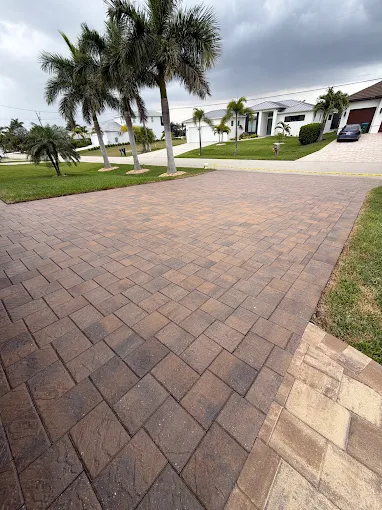
If your pavers have turned green, black or orange, the joints have washed out, or a few stones have sunk, cleaning and restoration is the work that brings the surface back to a sound, even condition. Spotless Solution LLC is an owner operated exterior hard-surface company in Cape Coral. We clean pavers, treat rust, oil and tyre marks, re-set low or lifted stones and refill joints across Lee County. Sometimes a proper clean is all you need. Sometimes the surface has to be repaired before it can be sealed. We will tell you which one you have, and we will not sell the bigger job when the smaller one will do.

What Paver Cleaning and Restoration actually involves
Restoration is a set of separate jobs, each fixing a different cause. Using the wrong treatment can set a stain rather than remove it.
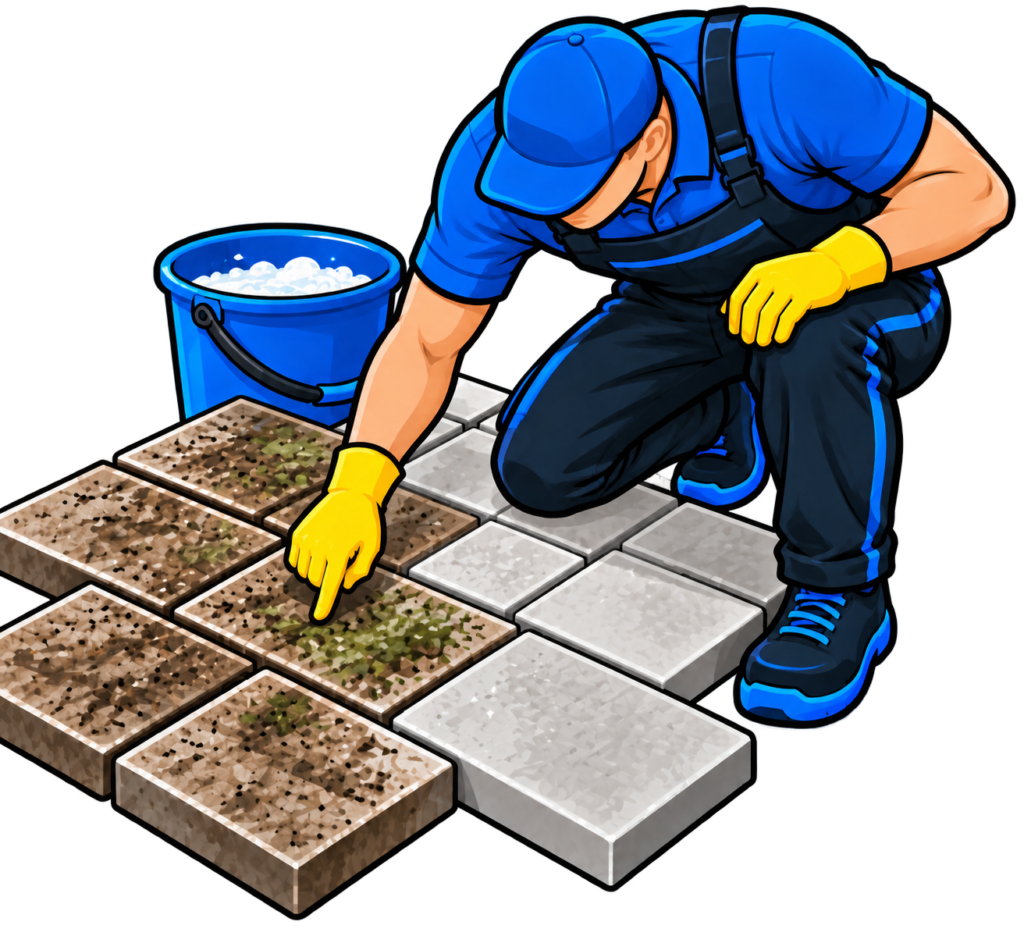
Working out what is actually on the surface
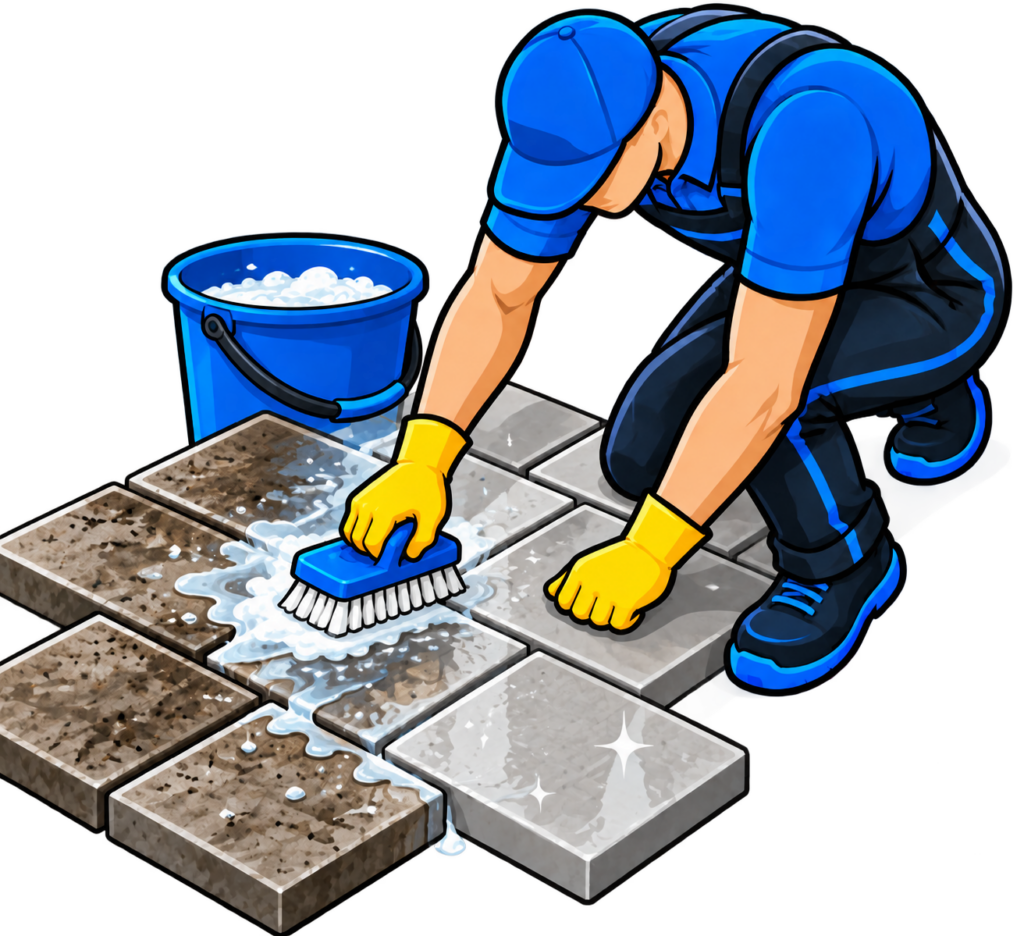
Cleaning matched to the paver
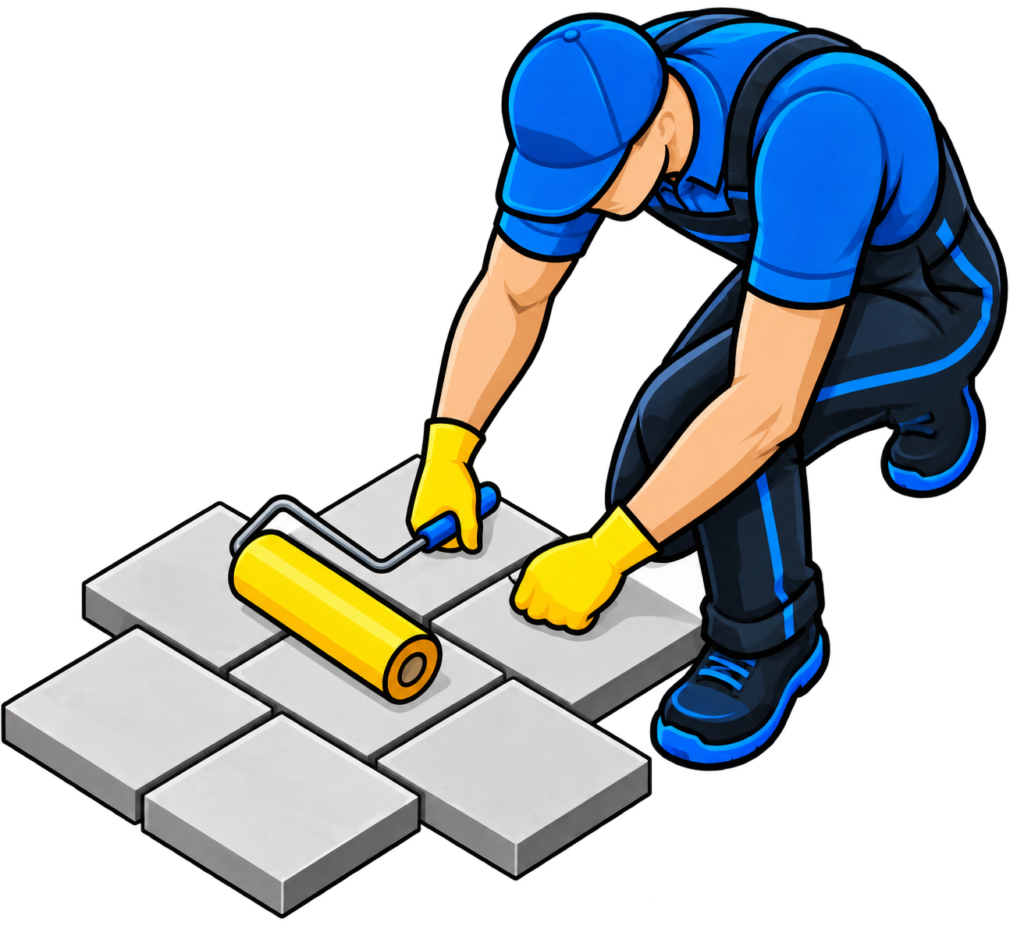
Treating rust, oil and tyre marks
- Rust: Iron stains need a rust-specific treatment that converts the iron. Ordinary washing barely touches them. If the source is a sprinkler head hitting the pavers, the stain will return until the spray is redirected.
- Oil: Pavers are porous, so oil soaks in rather than sitting on top. Fresh spills lift well. Old, deep oil often lightens without disappearing completely, and we will say so before starting.
- Tyre marks: Hot tyres can transfer plasticiser into the surface, especially where a film-forming sealer has softened. Many marks lift. Some leave a faint ghost.
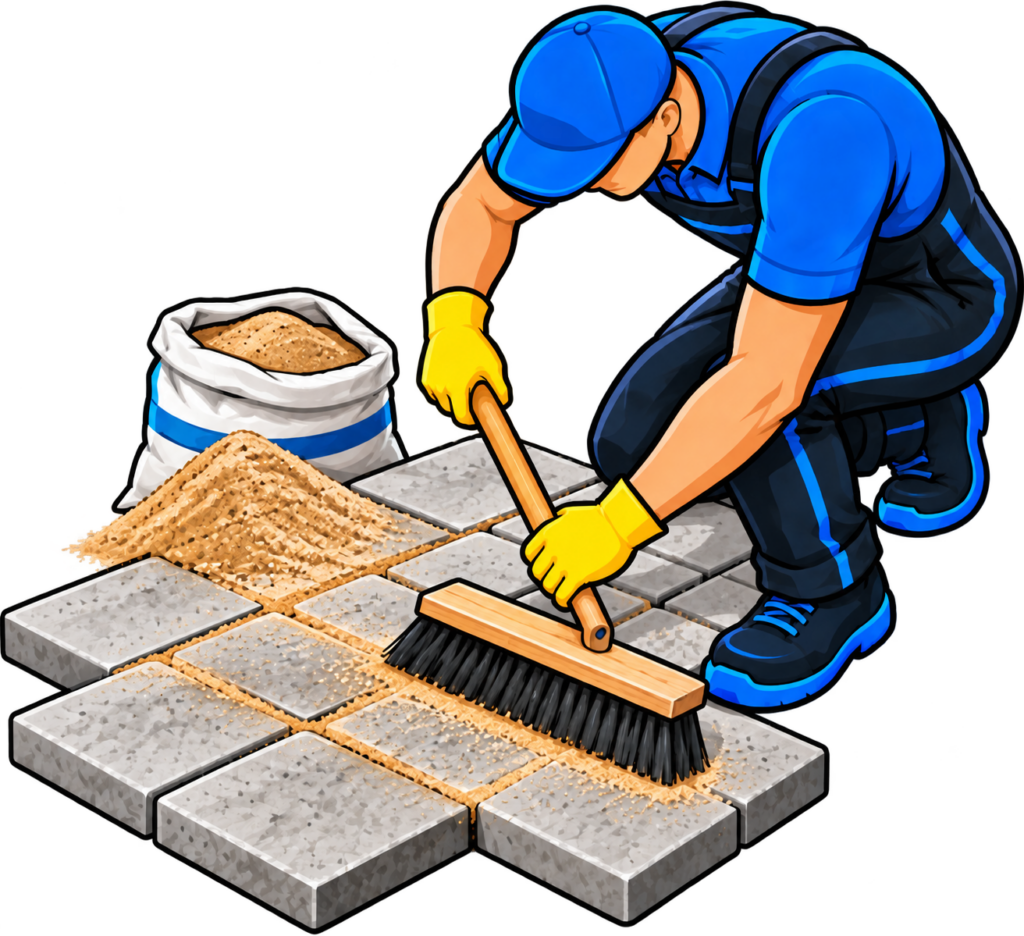
Efflorescence, assessed honestly
Efflorescence is the white, chalky haze that comes up through pavers. Water moves through the concrete, dissolves mineral salts and carries them to the surface, and the water evaporates and leaves the salts behind. Southwest Florida produces it easily: a high water table, heavy summer rain, humidity and irrigation that soaks the joints. New pavers are the most common offenders, but older surfaces can do it too.
It has to be dealt with before any sealer goes on. Sealing over it traps the salts under the film and turns a removable haze into cloudy, blotchy patches that can only be fixed by stripping the sealer and starting again. A contractor who seals over efflorescence is storing up a problem for you. Treating it can take more than one pass and some dry weather, and if the moisture source is still active, it can come back. Failing old sealer can look similar, so we check which one it is first.
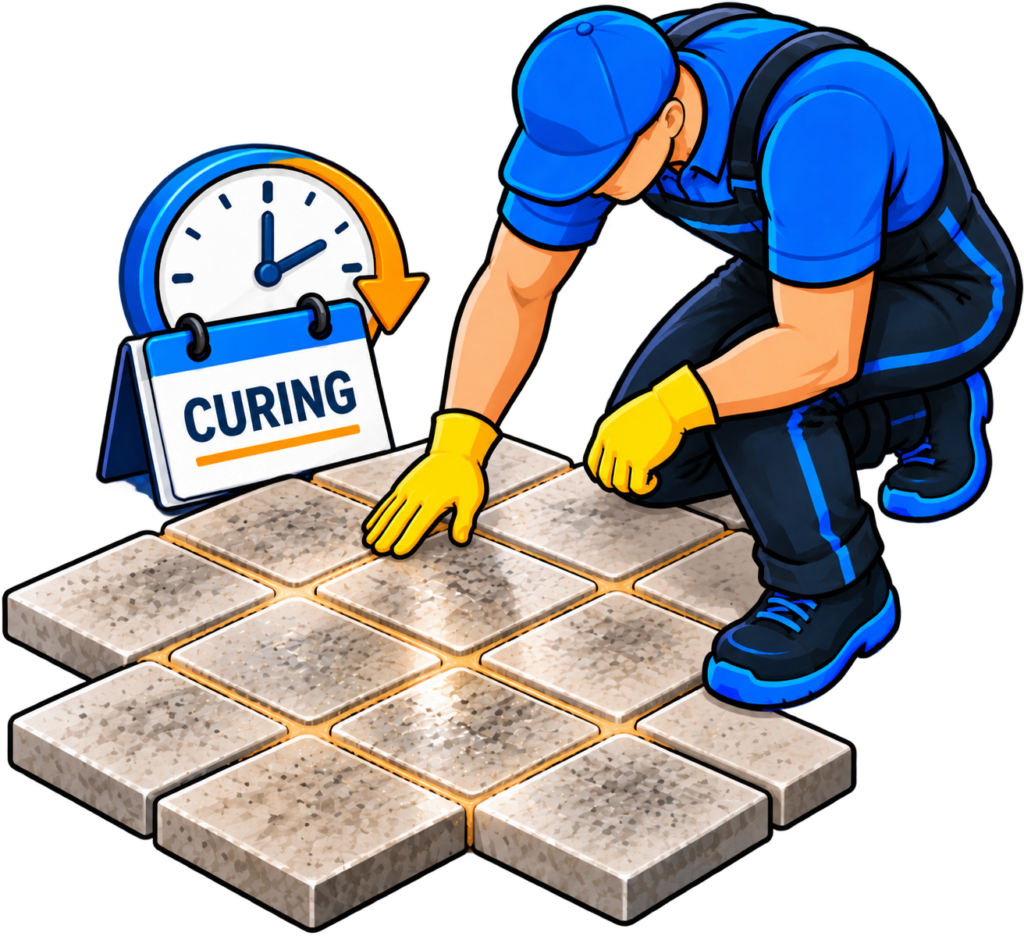
Re-setting sunken or lifted pavers
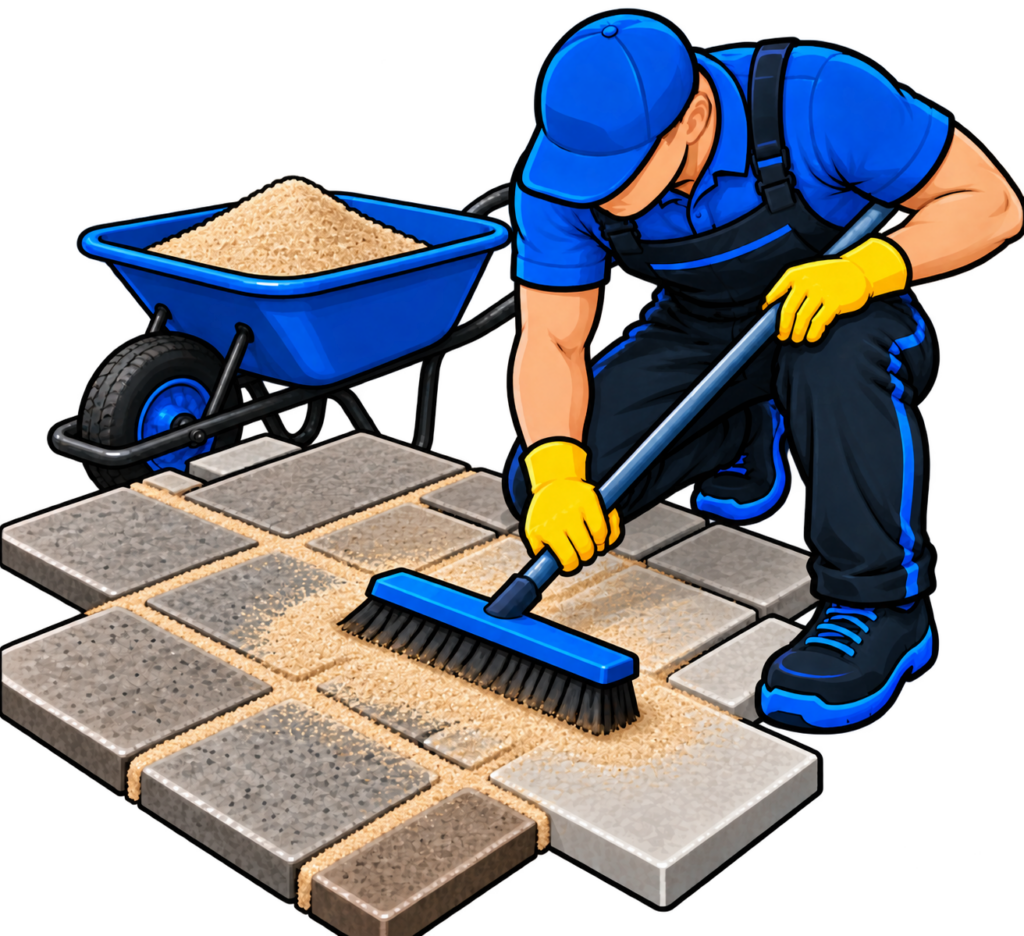
Joint sand replacement and stabilisation
When it is the right answer and when it is not
Cleaning and restoration is the right call for surfaces with growth, stains, low joints or minor settlement. It is not always the right call, and here is where it stops:
You only need a wash
The surface is too far gone to just seal
The problem is structural
Widespread sinking, pooling water or a failing base will not be solved by cleaning. Small areas we can re-set. If the fault is drainage or a base that has failed across a large area, we will tell you and you may need a paving contractor or a drainage fix.
The stain has a live source
It is travertine or natural stone
That is a different job with different chemistry, and concrete paver methods can damage it. Our stone work is handled separately.
Sealing slows damage and makes cleaning easier. It will not stop pavers settling, and it will not keep a surface looking good without maintenance. It is worth doing when the surface is ready for it.
What the choice means for how long it holds
Southwest Florida is hard on sealer. In full sun, film-forming sealers on driveways often need attention roughly every two to four years, and penetrating products can run longer, though neither is guaranteed. Shade extends the interval. South-facing driveways, pool decks and waterfront properties shorten it. The product, the number of coats, traffic, irrigation and how the surface is maintained all move the number. A schedule that works in Ohio does not work here.
Reviews From Happy Homeowners
Our customers share their experience with quality workmanship, honest recommendations, and lasting exterior improvements.
How we do the work
1
Free on-site estimate
We walk the surface, look at sun and shade exposure, check where the irrigation lands, and test suspect stains. You get a written scope and price, so you know what is included and what is not.
2
Prep and protection
Furniture, plants and screens near the work area are protected or moved as needed.
3
Clean and treat
4
Repairs
5
Drying
6
Joint sand
7
Walkthrough
We show you what came out and tell you plainly about anything that only lightened.
Products and what actually differs between them
- Penetrating sealers soak into the paver and leave little or no visible film. The surface keeps a natural look, it is less prone to peeling, and it does not hold heat as much, but you get little colour enhancement.
- Film-forming sealers sit on the surface and can give a satin to wet-look finish. They enrich colour, and they can also scuff, turn cloudy if moisture is trapped, or soften under hot tyres, which is where tyre pickup comes from.
- Solvent-based sealers generally flow deeper, produce richer colour and tolerate a wider range of conditions, but they have stronger fumes and tighter application windows.
- Water-based sealers are easier on odour and cleanup and suit some jobs well, though they can be less forgiving of moisture in the paver at the time of application.
- Joint sand stabilisation affects both looks and hold. Polymeric sand keeps joints firm and reduces weeds and washout, but must cure dry. Regular sand costs less and washes out sooner in summer rain.
How long any of this holds depends on the product, the exposure and the surface. Direct Florida sun, daily summer rain and salt air near the water all shorten it. Many film-forming sealers on sunny surfaces need attention in roughly two to four years, and sooner on south-facing driveways, pool decks or salt-exposed lots. That is a range, not a promise, and we will say what applies to your surface.
What it costs
Most paver cleaning and restoration jobs fall, depending on the job. We quote after seeing the surface, because two driveways of the same size can be very different jobs. What moves the price:
- Size of the area and how many separate surfaces are involved.
- Paver type, since concrete, brick and travertine need different methods.
- Severity of growth and staining, and how many passes it takes.
- Stain type: rust, oil and efflorescence take more time than surface algae.
- Repairs: re-setting pavers and correcting the base adds labour.
- Joint sand type and how many joints need refilling.
- Whether sealing follows, which is priced as its own step.
Where we work
Spotless Solution LLC is based in Cape Coral and serves 29 communities across Lee County within roughly 20 miles. That includes Cape Coral, Fort Myers, North Fort Myers, Matlacha, Pine Island, Sanibel, Fort Myers Beach and Lehigh Acres, along with the neighbourhoods around them. See the full list on our Service Areas page.
Common Questions
What is the difference between paver cleaning and pressure washing?
Do I have to seal after cleaning?
What is the white haze on my pavers?
Can you remove rust stains from sprinkler water?
Usually yes, with a rust-specific treatment. Ordinary washing does not remove iron. If the sprinkler is still hitting the pavers, the stain will return, so it is worth adjusting the heads or the water source.
Will you remove oil and tyre marks?
Can you fix sunken or lifted pavers?
Why did my joint sand wash out so quickly?
How soon can pavers be sealed after cleaning?
Will cleaning make my pool deck safer to walk on?
How often should pavers be cleaned in Lee County?
Ready to have the surface looked at?
Call Spotless Solution LLC on 239-341-9788 for a free on-site estimate.