Schedule a FREE Estimate | Paver Sealing | Paver Cleaning and Restoration | Pressure Washing

Dock and Seawall Cleaning in Southwest Florida
If you own the waterfront in Cape Coral, you already know the look: a dark band along the waterline, barnacles crusted on the seawall, green slime on the dock boards, and a cap that has gone grey and blotchy. Salt water, warm temperatures and long daylight keep marine growth active nearly all year here. Left alone, it holds moisture against the surface, makes boards and caps slick, and hides what the material is doing underneath. Spotless Solution is an owner-operated exterior hard-surface company. We clean docks, seawall caps, seawall faces and boat lifts across Lee County. We do not repair seawalls.

What the work involves
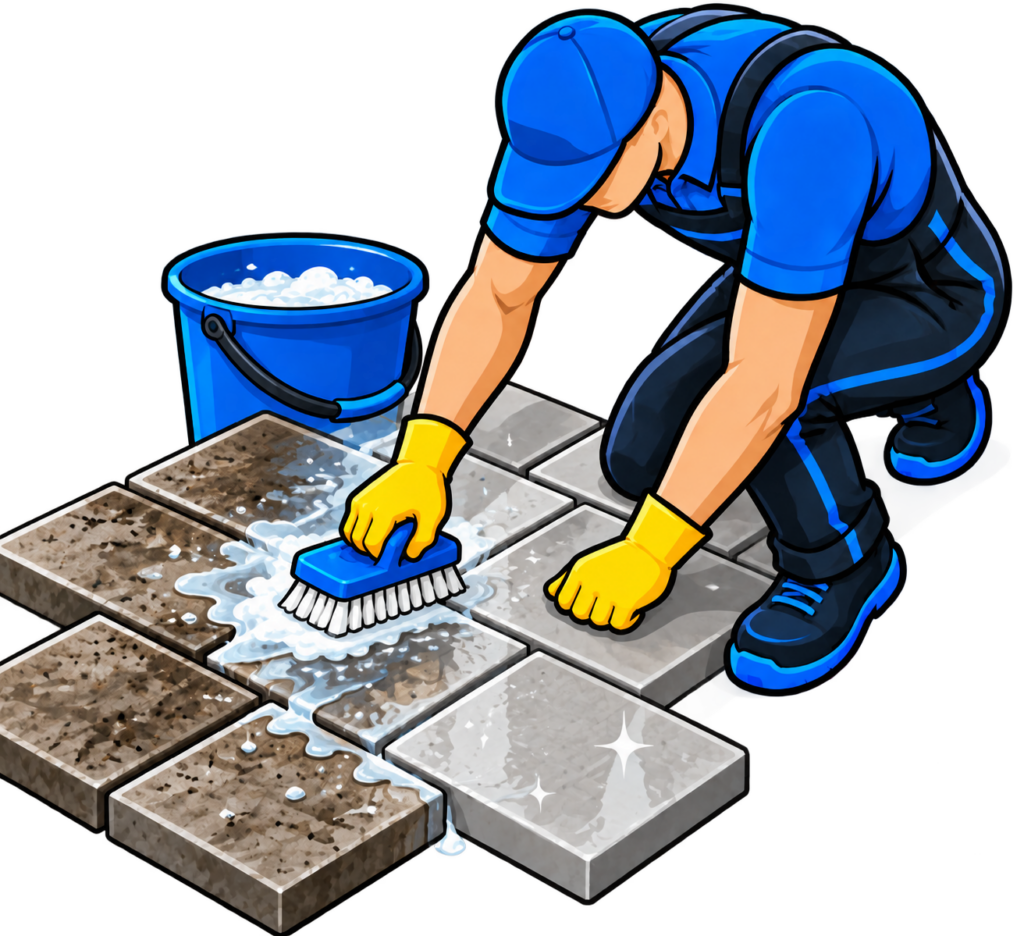
The waterline growth band and barnacles
Algae and biofilm on caps and dock decking
Composite and wood docks
Boat lifts, pilings and hardware
Concrete seawall caps
Caps are porous concrete, and they collect more than algae:
- Iron staining from irrigation water, which leaves orange and rust-coloured streaks that behave differently from algae and need a different approach.
- Rust bleeds from corroding hardware or reinforcement, which is a warning sign and not just a stain.
- Surface wear from sun and salt, which opens the pores and lets growth grip harder.
Too much pressure on aged concrete strips the surface paste and exposes aggregate, so the pressure and the cleaning method are matched to the cap, not set to maximum.
Waterfront homes often need both
When it is the right answer and when it is not
Cleaning is the right answer when
- The dock or cap is slick, dark or stained but the material is sound.
- Barnacles and the waterline band have built up and you want the wall face visible again.
- You want a clear look at the surface before deciding on repairs or a sale.
- You want a regular maintenance interval instead of a one-time fix.
Cleaning is not the answer when
- The cap is cracked, spalling or lifting, or reinforcement rust is bleeding through.
- The wall is leaning, or you see soil loss, sinking or voids behind it.
- Dock boards are soft or loose, or pilings and framing look compromised.
Reviews From Happy Homeowners
Our customers share their experience with quality workmanship, honest recommendations, and lasting exterior improvements.
How we do the work
1
Walkthrough and estimate.
We look at the dock, cap, wall face and lifts, and note the material and how much growth is on each. You get: a clear scope and a free estimate.
2
Condition check
3
Preparation
We agree on access, boat and lift position, and what needs protecting, such as plantings, screens and nearby stone. You get: no surprises on the day.
4
Cleaning matched to the material
5
Runoff and debris control
6
Final walkthrough
We go over the finished work with you and tell you what to expect as growth comes back. You get: an honest picture of the maintenance interval for your property.
Environmental care
What it costs
Most dock and seawall cleaning jobs fall. Where a job lands in that range depends on:
- Linear feet of seawall and the size of the dock.
- Amount of growth, especially barnacle coverage, which slows the work considerably.
- Material, since wood, composite and concrete each take different time and care.
- Access from land or water, and tide timing at the waterline.
- Extras such as boat lifts, pilings and multiple docks.
Estimates are free, and we give you the price for the work we see before we start.
Where we do this work
We serve 29 communities across Lee County within roughly 20 miles of Cape Coral. Dock and seawall work is not spread evenly across them, so here is where it concentrates and why.
- Cape Coral The most common location for this service. The city has more canal frontage than almost anywhere in the country, and most waterfront homes have a seawall, a cap and often a dock and lift.
- Lochmoor Waterfront homes with seawalls and docks on the waterway, where regular cleaning keeps caps and boards from staining and going slick.
- St. James City Docks and walls here are exposed to open water and salt air, which speeds staining, corrosion and growth.
- Matlacha Older waterfront, close to the water, where careful runoff control matters as much as the cleaning itself.
We also work on waterfront properties in Fort Myers and elsewhere in Lee County. Travertine and natural stone work is more common in the newer gated communities, so if the surface you need done is a pool deck or lanai, see our travertine and paver pages instead.
Common Questions
Do you repair seawalls?
How long does the cleaning last?
Will cleaning harm the canal or wildlife?
Will my dock be slip-proof afterward?
Can I rent a pressure washer and do it myself?
We do not recommend it and will not give steps for it. Pressure that is too high damages wood, strips concrete surfaces and can hurt the person holding the wand. Runoff into the canal is also a concern.