Schedule a FREE Estimate | Paver Sealing | Paver Cleaning and Restoration | Pressure Washing
Paver Sealing in Cape Coral, FL
Canals run through this city for roughly four hundred miles, and the wind off that water carries salt and brackish spray onto driveways that never touch the shoreline. Add direct sun most of the year, afternoon storms from June through September, and sprinkler water that leaves rust marks on light pavers, and a paver surface here takes more punishment than the same stone in most of the country. Sealing decides how much of that damage ends up in the color, the joints and the surface.

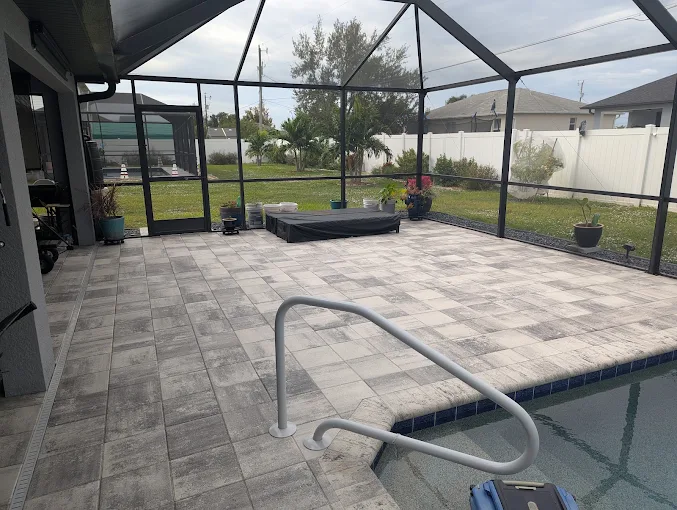
Paver Sealing in Cape Coral
Paver sealing is a protective treatment applied to a surface that is already sound. It slows stain absorption, holds color against UV, and, when joint sand stabilization is done properly, keeps the sand in the joints through heavy rain instead of letting it wash out and invite weeds and insects.
It does not fix sunken or cracked pavers, remove stains that are already in the stone, or stop efflorescence. It also does not make a surface slip-proof. Sealer finish affects traction, so on a pool deck or lanai we talk through options rather than promise an outcome.
Most homes here have a paver driveway, a lanai and a screened pool cage, so the people who need this are nearly everyone with pavers: owners of new installs, owners whose color has faded, and owners whose joints are thinning.
When a driveway is ready to seal
The pavers are level, the joints are full, and the surface is free of active haze and set-in stains. When it is not: if it is stained, hazy, algae-covered or low on joint sand, it needs cleaning and re-sanding first. Sealing a dirty surface locks the dirt in. If that is your situation, see Paver Cleaning and Restoration in Cape Coral.
Efflorescence: the problem to sort out before any sealer goes on
Efflorescence is the white haze that appears on pavers. Water moves through the paver and joints, dissolves natural salts, and leaves them on the surface as it evaporates. Humidity, summer rain and sprinklers that wet the paver edges all feed it here.
It has to be dealt with before sealing. A contractor who seals over it traps those salts under the coating, and the haze can turn cloudy and permanent. If a quote does not mention checking for it, ask why. Treating it is a job for a trained crew, not a weekend project, because the wrong chemistry or the wrong pressure damages the paver.
What Cape Coral hardscape is up against
Salt and brackish spray
You do not need to be on the water. Wind carries salt inland, and canal-front homes get it daily. Salt dries into the surface and speeds up wear on an unsealed paver and on an aging sealer.
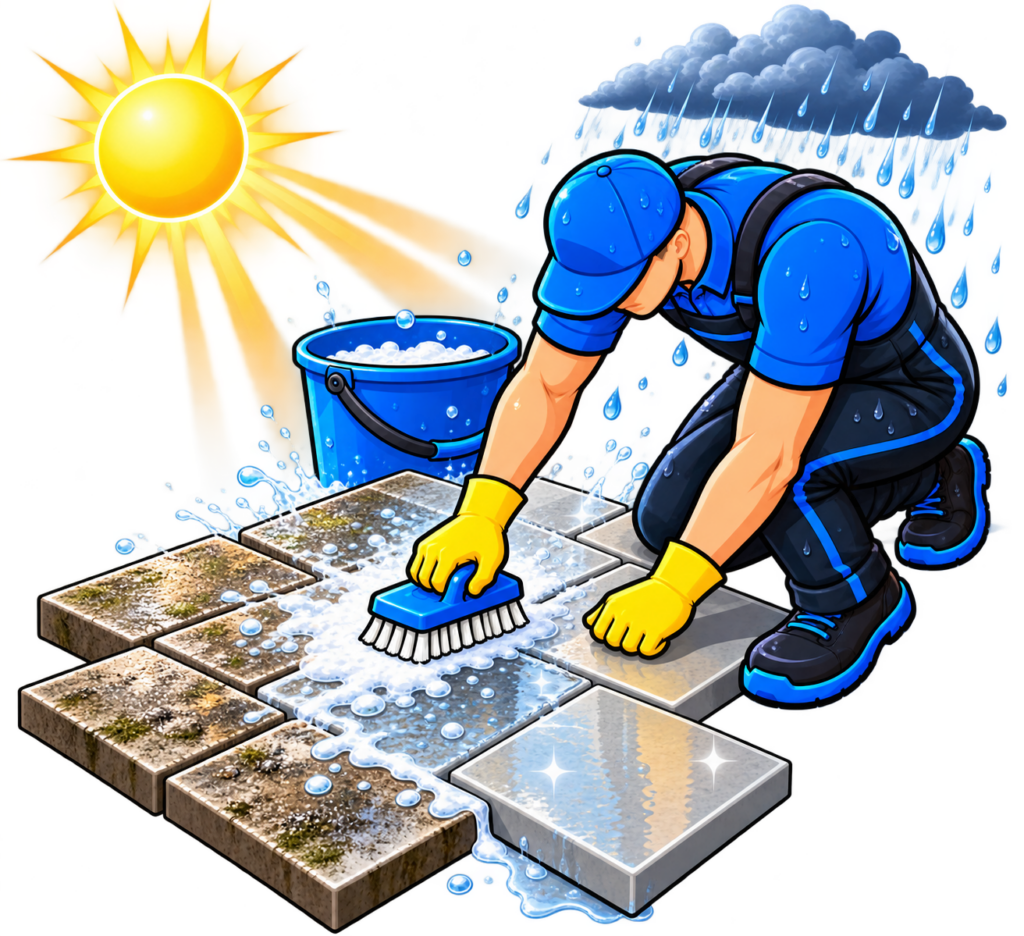
Sun and summer rain
UV breaks down sealer and fades pigment. Then daily storms soak the joints. A schedule that works in Ohio fails here.
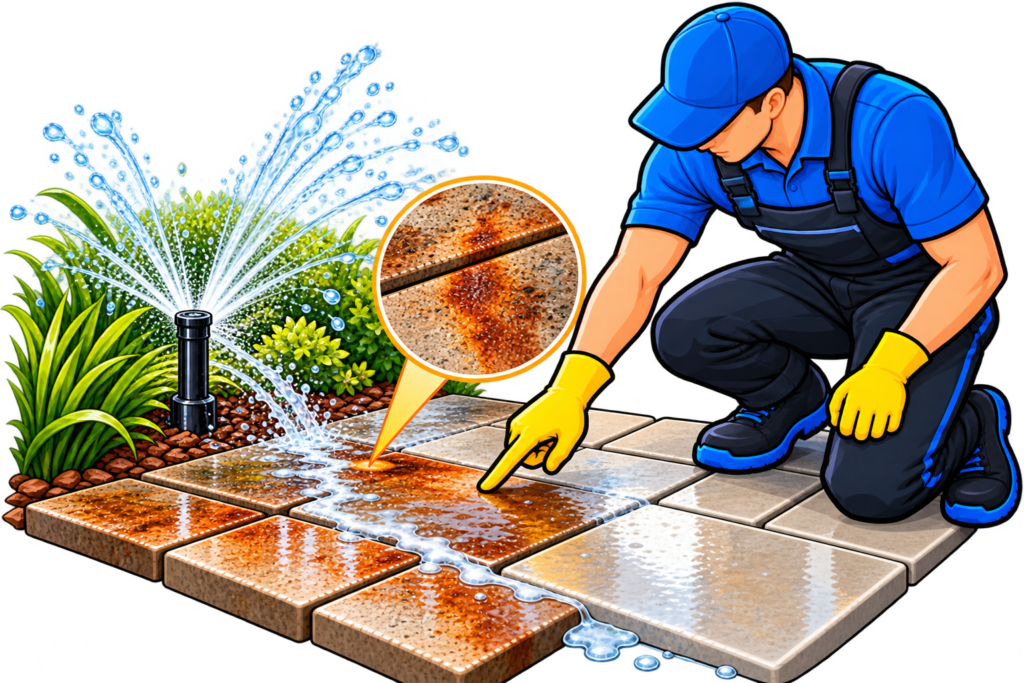
Irrigation water and iron
Sprinkler overspray often carries iron, which leaves orange streaks along drive edges and walkways. Sealer helps resist absorption, but it does not make staining impossible, and fixing the overspray matters as much as the coating.
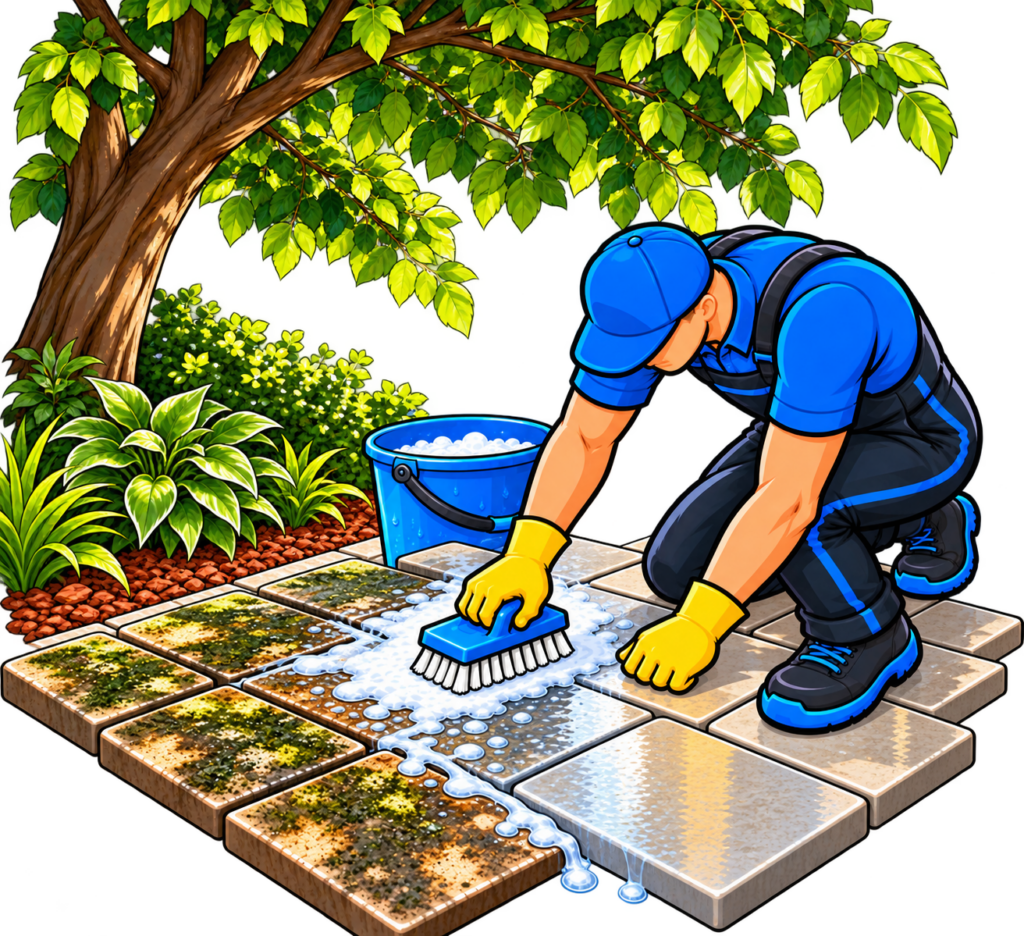
Shade and tree canopy
Shaded pavers stay damp, grow algae and mildew, and show different wear than sun-baked ones. A driveway can need two different treatments on the same property.
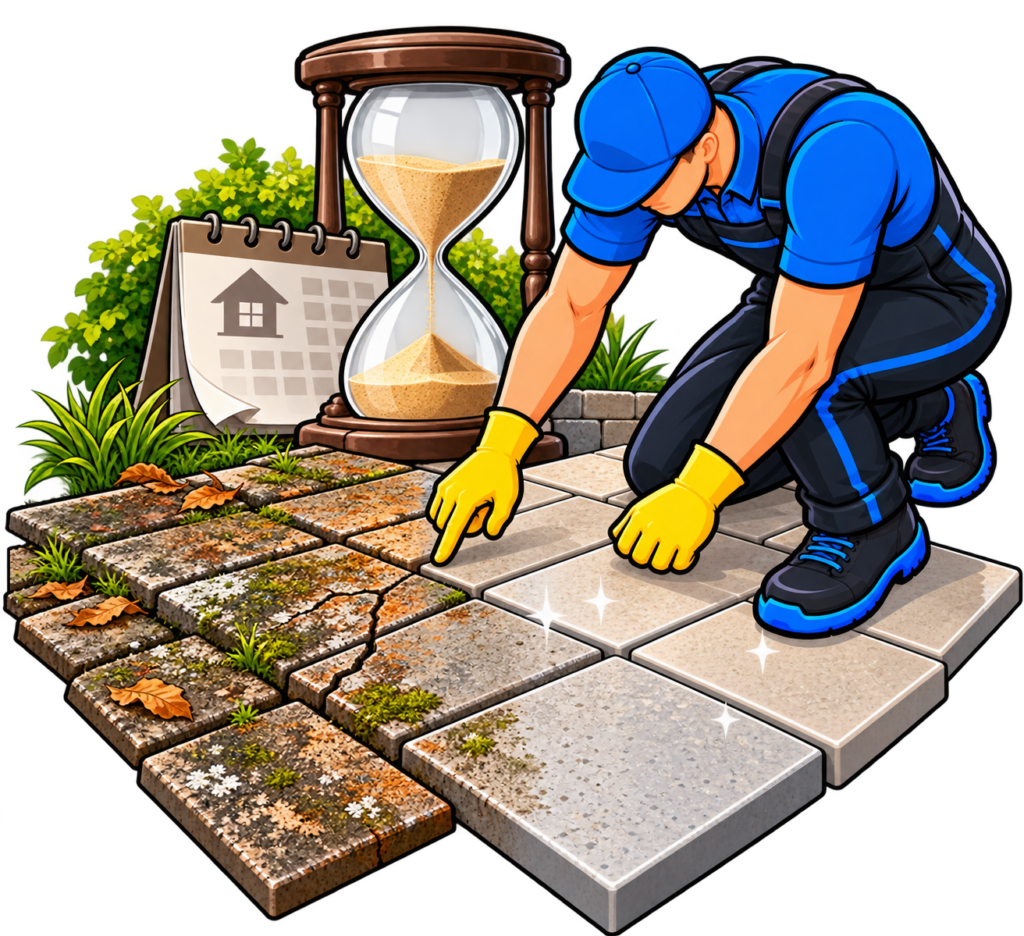
Age of the installation
Much of the housing here was built in waves, so you find fresh pavers next to twenty-year-old ones. New pavers need time to cure and shed their own surface salts before sealing. Older pavers usually need joint repair first.
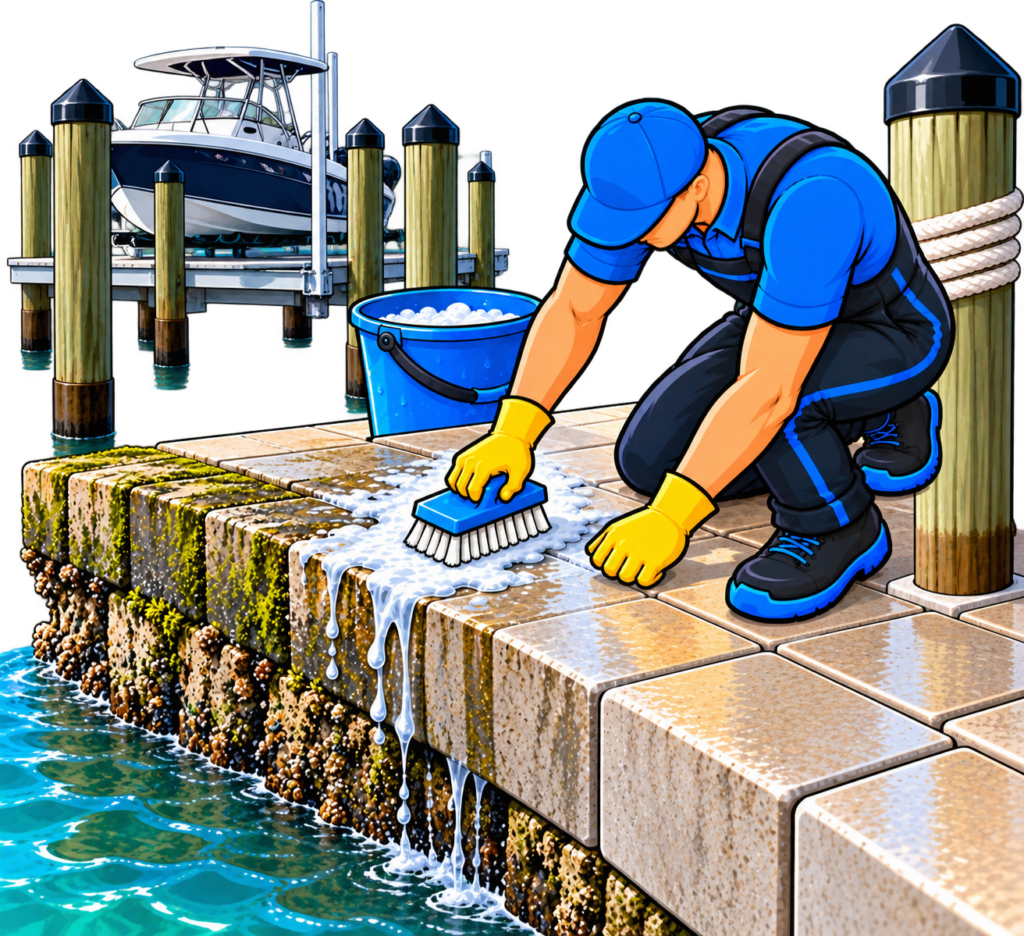
Canal lots, docks and seawalls
The highest concentration of dock and seawall work in our service area is right here. Those properties often have the same pavers running from the driveway to the water’s edge, with salt exposure on every surface.
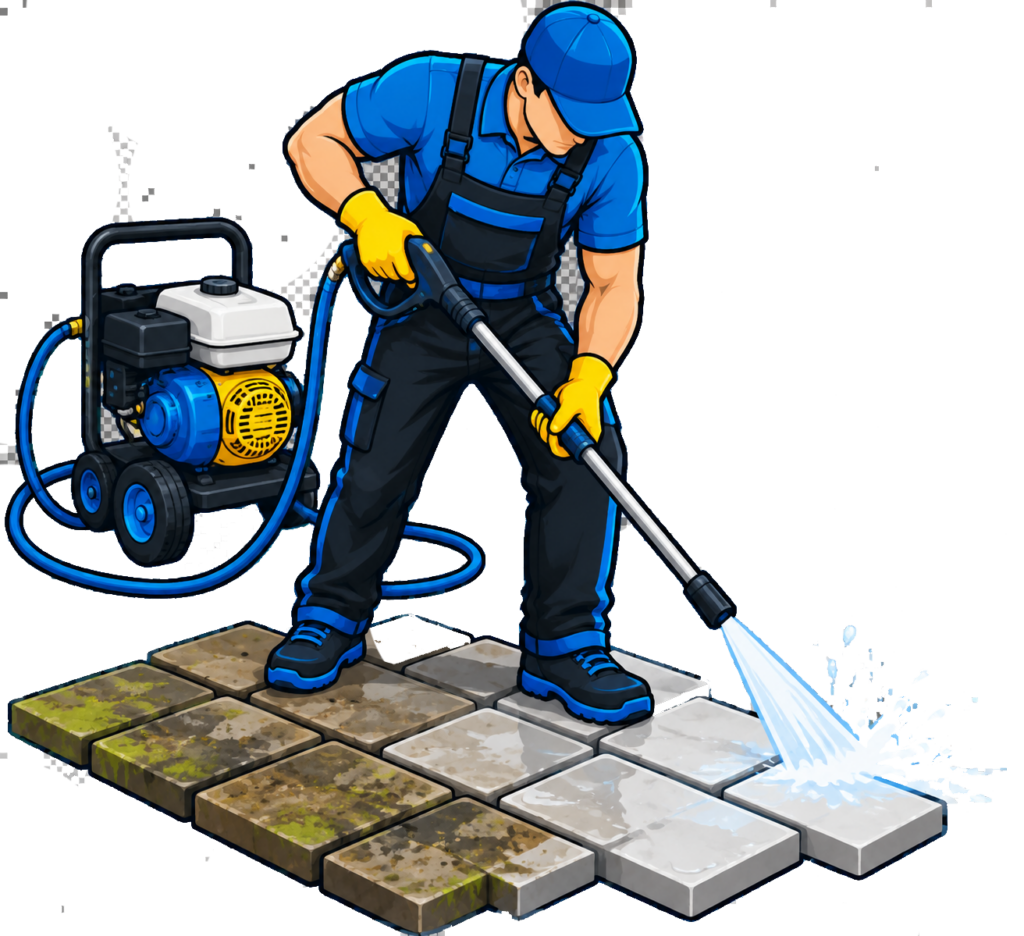
HOA standards and seasonal owners
Some communities limit sealer finish, so wet look versus natural is worth checking before you decide. If you are away for the summer, sealing before you leave beats coming back to a season of rain and mildew on bare pavers.
Reviews From Happy Homeowners
Our customers share their experience with quality workmanship, honest recommendations, and lasting exterior improvements.
How we do the work
1
Assessment
We walk the surface and check levelness, joint sand, stains and any sign of efflorescence. You get: a plain explanation of what is sound, what needs repair, and whether sealing is the right next step.
2
Preparation
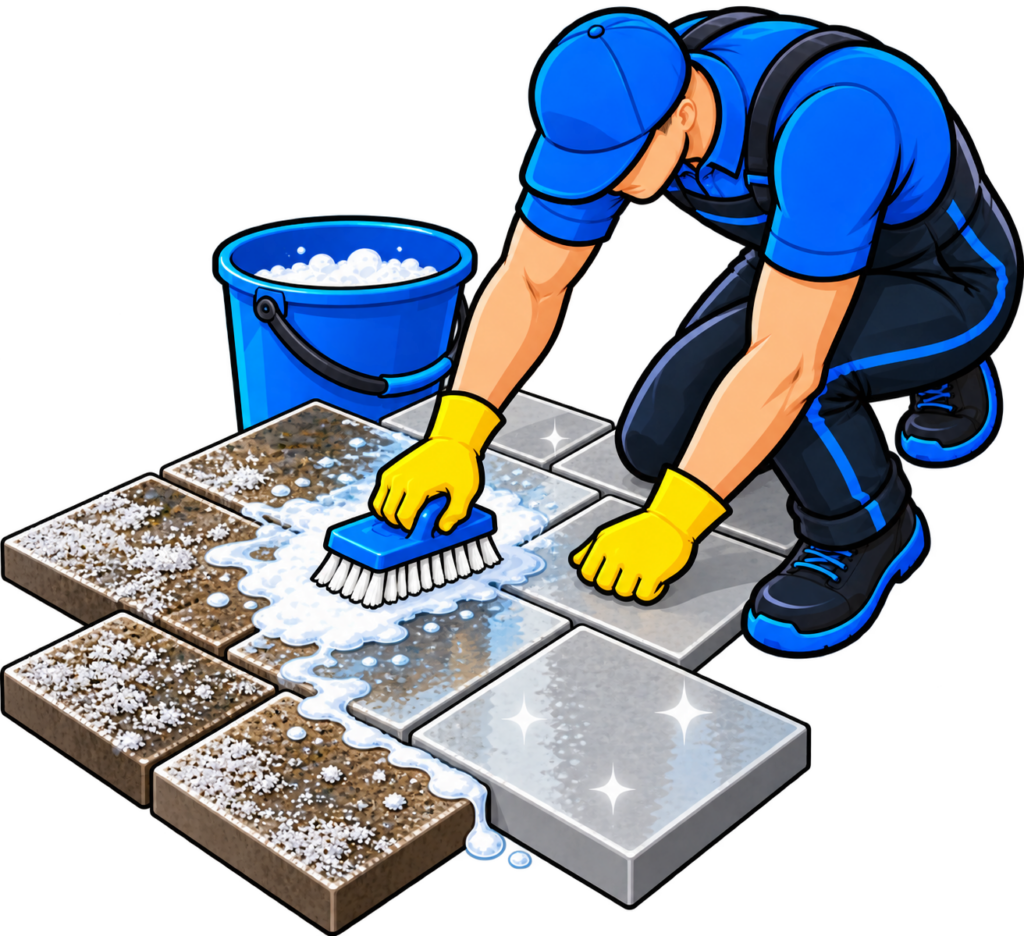
The surface is cleaned as the assessment calls for and left to dry fully. You get: a clean, dry paver, which is the only surface a sealer bonds to properly.
3
Joint sand stabilization
Joints are topped up and set so they hold through rain. You get: full, firm joints that resist washout and weed growth.
4
Product and finish choice
We explain film-forming versus penetrating sealers, solvent versus water-based, and natural versus wet look. Film-formers give a visible finish and stand up to hot tyre pickup differently than penetrating products. You get: an agreed product and finish, confirmed on a small test area first.
5
Application in the right conditions
Surface temperature, humidity and the rain forecast all decide when sealer can go on. You get: even coverage with no puddling and no rushed coat.
6
Cure and handover
You get: clear keep-off times for foot and vehicle traffic and an honest reseal window for your exposure.
What it costs
- Total square footage and layout
- Joint sand condition and any re-sanding needed
- Cleaning or efflorescence treatment required before sealing
- Sealer type and finish
- Access, pool cages and tight lanai spaces
Common Questions
How often do pavers need resealing in Southwest Florida?
There is no single answer. Film-forming sealers in full sun commonly need attention every two to four years, depending on the product, how much direct sun and rain the surface sees, and how much traffic it carries. Shade, salt and sprinkler overspray move that interval in different directions, so we give you a range for your property, not a promise.
I see a white haze on my pavers. Can you just seal over it?
No. That haze is usually efflorescence, and sealing over it can make it permanent. It needs to be addressed first. Our Paver Cleaning and Restoration page covers that side of the work.
Is it safe to seal a pool deck or lanai?
Sealing is common on both, but sealed surfaces can feel different underfoot when wet. We do not call any finish slip-proof. We can discuss finishes and options that affect traction so you can choose with the facts.
Can pavers be sealed during the rainy season?
Sealer needs a dry surface and a dry window to cure. Summer storms here make that window narrower, so scheduling around the forecast matters. Sealing before the wet months, or in a settled dry stretch, gives the best result.
Does living on a canal change anything?
Yes. Salt and brackish spray wear sealer faster on the water side, and docks and seawall-adjacent pavers stay wetter. Expect a shorter reseal window than a driveway setback from the water