Schedule a FREE Estimate | Paver Sealing | Paver Cleaning and Restoration | Pressure Washing
Driveway Paver Sealing in Southwest Florida
A paver driveway takes more punishment than any other hardscape on your property. Tyres turn on it, hot rubber presses into the surface in July, oil drips from the same spot every morning, and irrigation water carries iron leaves and orange streaks along the edges. Unsealed pavers in Southwest Florida soak all of it up, and the joint sand between them washes out with every summer storm. Sealing decides whether those marks sink in or stay on the surface where they can be cleaned. This page explains how driveway sealing works here, when it is worth doing, and what it costs.

What the work involves
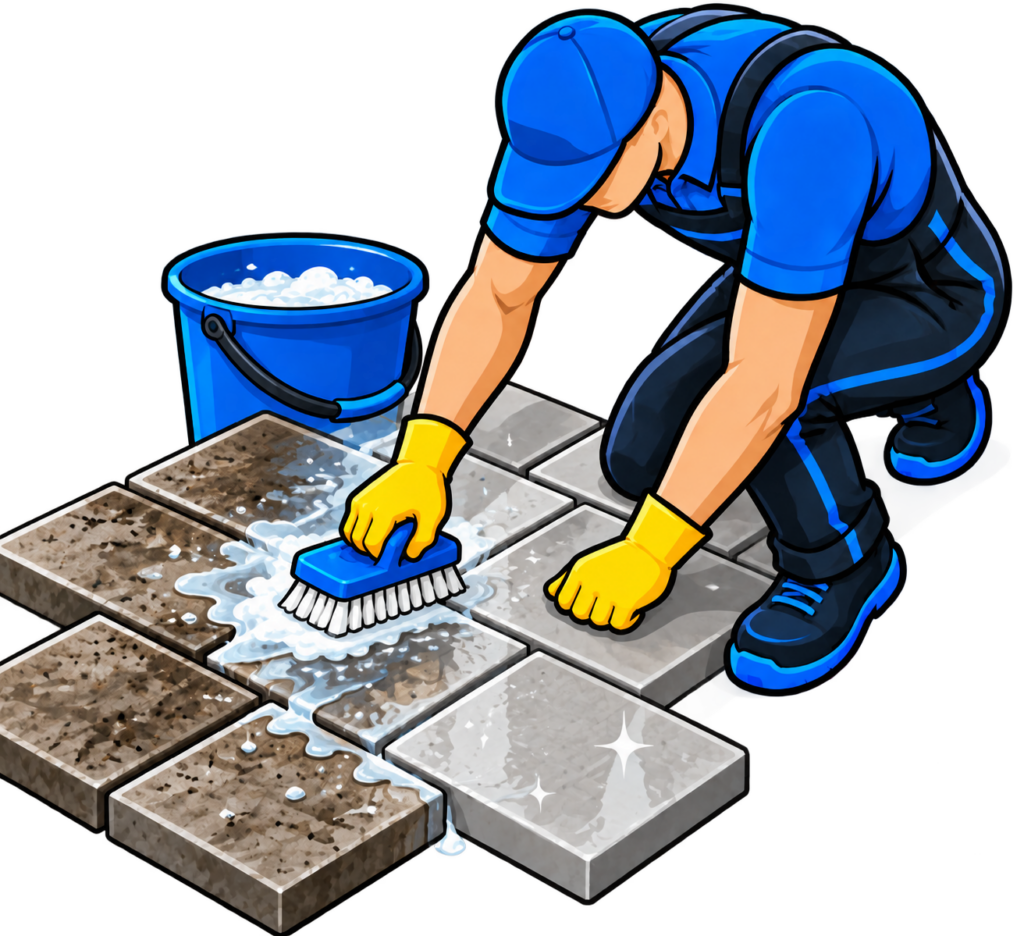
Cleaning and stain treatment come first
Efflorescence has to be dealt with before sealing
Efflorescence is the white, chalky haze that shows up on pavers. Concrete pavers contain cement, and when moisture moves through the paver it carries dissolved salts to the surface. As the water evaporates, the salts are left behind as a white film. Southwest Florida produces it in volume: summer rain, high humidity, sprinklers hitting the edges of the drive, and a high water table all keep moisture moving through the paver.
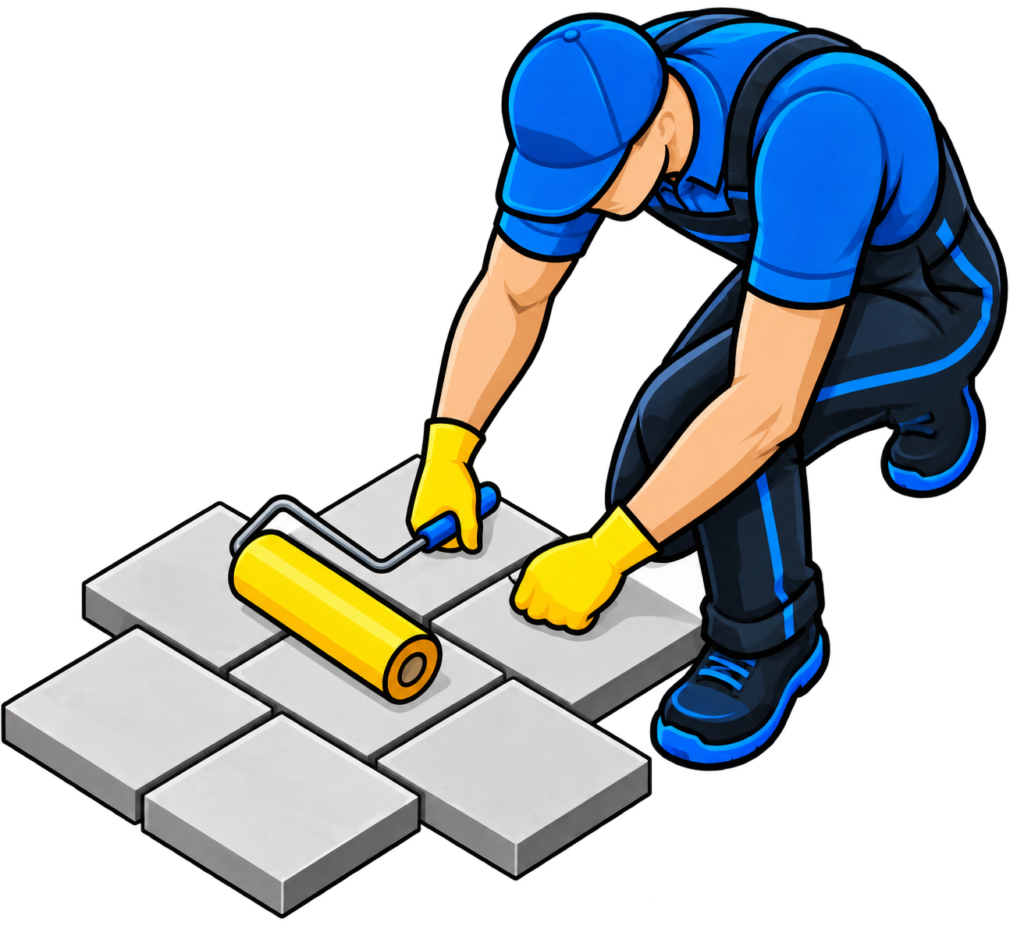
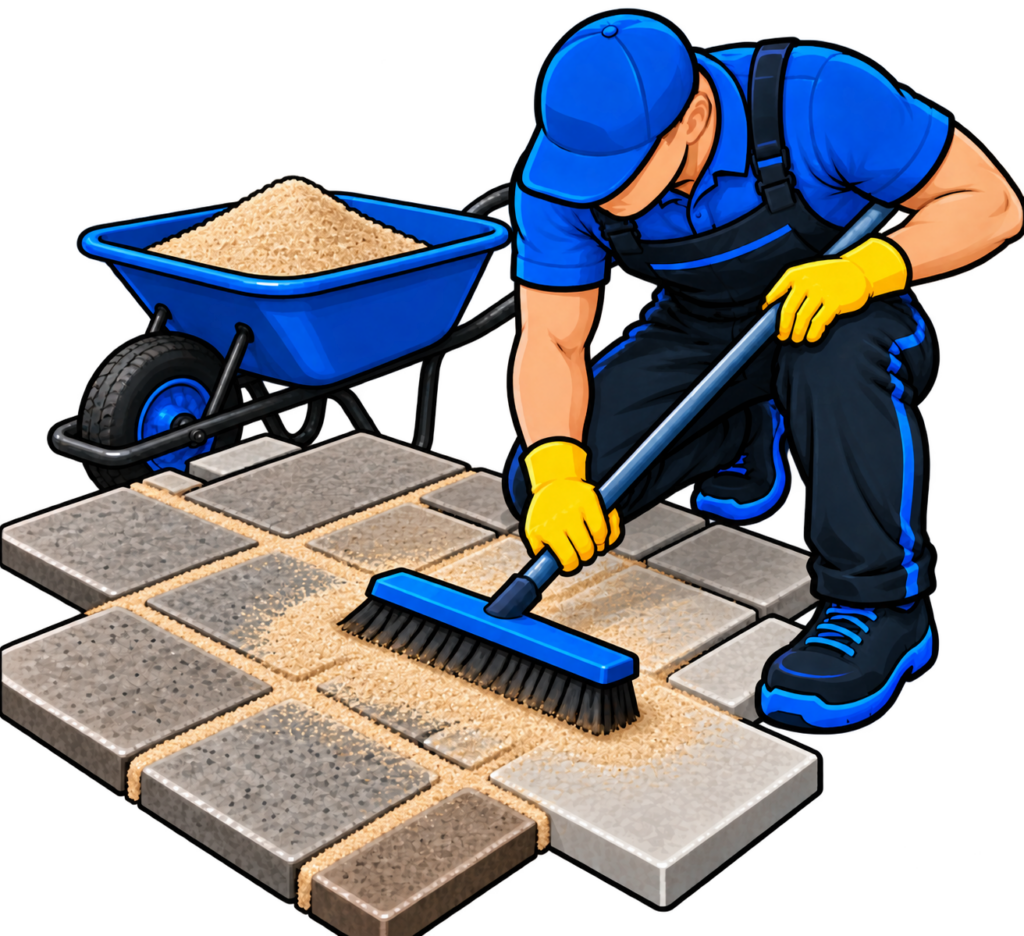
Joint sand holds the driveway together
Sealer choice depends on what the driveway does
Weather and cure time set the schedule
Straight Talk
Sealing over efflorescence does not hide it, it makes it permanent. The film traps moisture and salts underneath, and the result is cloudy white patches that are far harder to fix than the original haze. A contractor who seals over it is storing up a problem for you. We check for it before quoting, tell you what we find, and sometimes the honest answer is to wait until it has stopped before sealing.
What makes this different from Pool Deck and Lanai Sealing
Driveway
Pool deck and lanai
Travertine and natural stone
a different material and a different job. Stone is porous in a different way and reacts to cleaners differently from concrete pavers. It has its own page.
Pressure washing alone
cleaning without sealing. Right for some surfaces, and covered on the pressure washing pages.
When it is the right answer and when it is not
Sealing makes sense when
The pavers are sound, level and the joints are holding sand.
Sealing is the wrong call when
Pavers have settled, sunk or heaved
Efflorescence is still coming through
Sealing now would trap it. We would rather wait than seal over it.
The pavers are brand new
Oil has soaked deep
Sometimes a thorough clean and a joint refill is all a driveway needs, and we will tell you that rather than sell you a seal.
Reviews From Happy Homeowners
Our customers share their experience with quality workmanship, honest recommendations, and lasting exterior improvements.
How we do the work
1
Site assessment and free estimate
We look at the pavers, joints, stains and any sign of efflorescence. You get a written scope and honest notes on the condition of the drive.
2
Cleaning and stain treatment
The surface is cleaned to suit the paver and the stain type. Any efflorescence is dealt with here, before anything is applied.
3
Joint check and sand
4
Sealer application
The product is applied when the surface, temperature and weather are right, and the finish you chose is confirmed before we start.
5
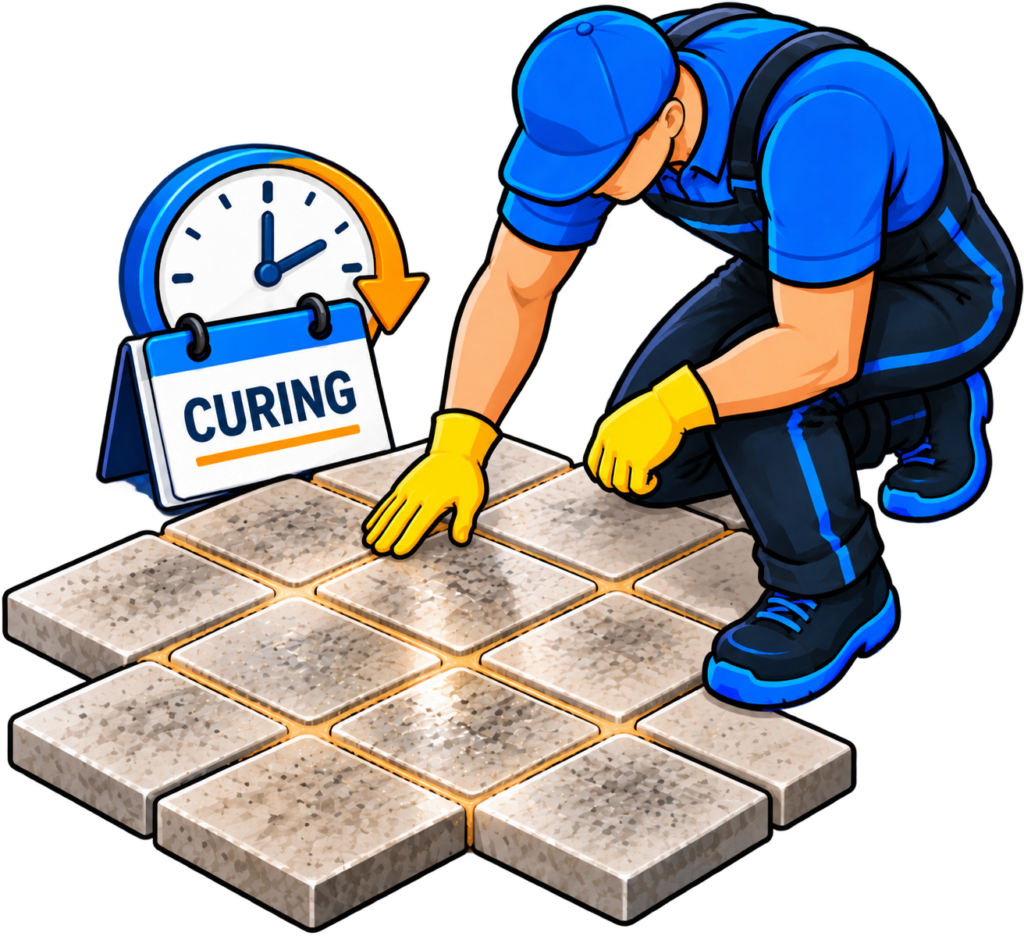
Cure and handover.
You get the cure time for your specific job, care notes, and a realistic reseal range for your driveway.
Spotless Solution is owner operated. Licence details: {LICENCE}.
How long a driveway seal lasts
A driveway seal here commonly needs attention somewhere in the range of two to four years, and it can be sooner. The interval moves with the product, how much direct sun the drive gets, how often the sprinklers hit it, how heavily it is used, and how close you are to salt air. A drive under a mature tree behaves differently from one baking in open sun. We give you a realistic interval for your driveway at the estimate, not a single number for everyone.
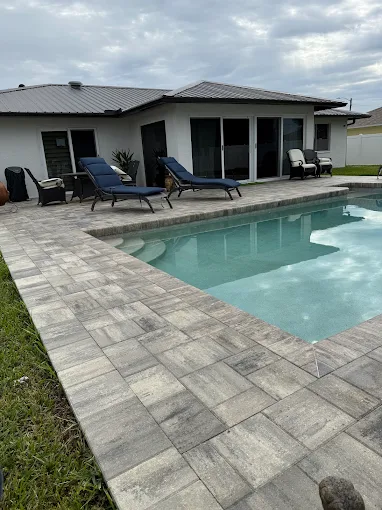
What it costs
Driveway sealing is priced by the surface, not by a flat rate. Most driveways fall, and the estimate is free. What moves the number:
- Size of the driveway and any extra pads or walkways.
- Condition of the surface, including algae, oil and rust staining.
- Efflorescence treatment if it is present.
- Joint work, where sand needs to be refilled.
- Sealer type and finish, since products and finishes differ.
Cleaning alone costs less than cleaning and sealing, and we will price both if you are not sure which you need.
Where we do this work
We serve 29 communities across Lee County, within roughly 20 miles of Cape Coral, including Cape Coral and Fort Myers. Driveway sealing is relevant across the whole territory because the sun, rain and irrigation conditions are the same everywhere. Community list:
- We serve 29 communities across Lee County, within roughly 20 miles of Cape Coral, including Cape Coral and Fort Myers. Driveway sealing is relevant across the whole territory because the sun, rain and irrigation conditions are the same everywhere. Community list:
- Lochmoor, St. James City and Matlacha: close enough to the water that salt air speeds up wear on the seal, so the reseal interval tends to be shorter.
- Newer gated communities: paver driveways are common, and travertine tends to concentrate on entries, pool decks and lanais. Travertine is a separate job and is handled on its own page.
We also clean docks and seawalls in Cape Coral, Lochmoor, St. James City and Matlacha. That is surface cleaning only. Structural seawall repair is a marine contractor’s work, and we do not do it.
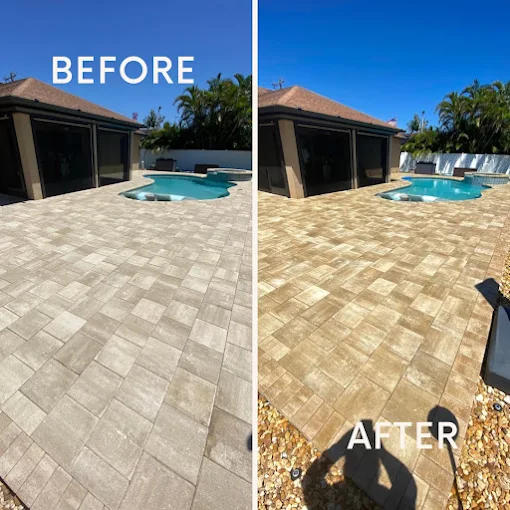
Common Questions
How often does a driveway need resealing in Southwest Florida?
Can you seal over the white haze on my pavers?
Will sealing stop oil and rust stains?
How soon can I drive on it after sealing?
Can I seal new pavers straight away?
Usually not. New pavers need time to cure and to finish releasing moisture and salts, and the wait varies. Call before you book and we will tell you what to expect.
Will a sealed driveway be slippery?
It can be, especially a film-forming finish when wet, and we do not call any sealed surface slip-proof. Finish choice affects traction, so tell us if the driveway slopes or gets a lot of foot traffic and we will talk through the options.
Get a free driveway estimate
If your driveway has white haze, orange edges, oil marks or open joints, call Spotless Solution at 239-341-9788 for a free estimate anywhere in Lee County. We will tell you what the pavers need, including when the answer is not a seal.