Schedule a FREE Estimate | Paver Sealing | Paver Cleaning and Restoration | Pressure Washing
Pool Deck and Lanai Sealing in Southwest Florida

What the work involves
Cleaning, stains and efflorescence
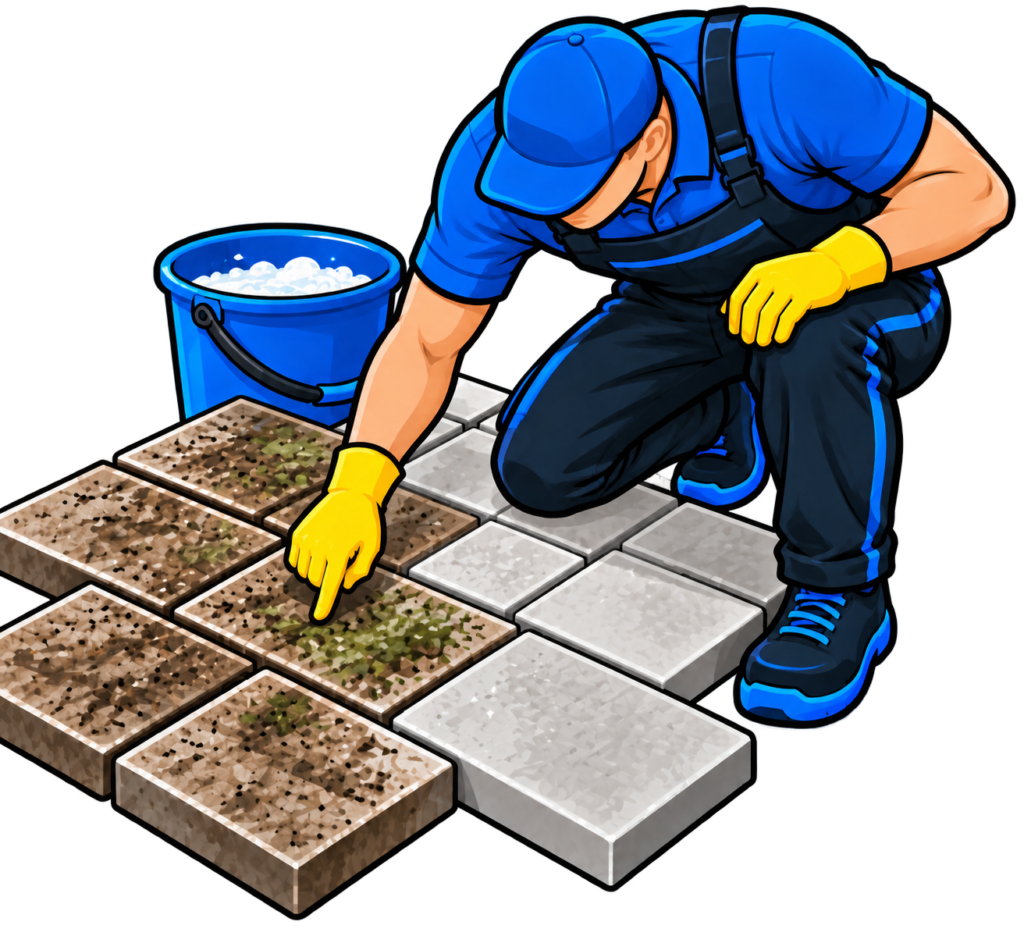
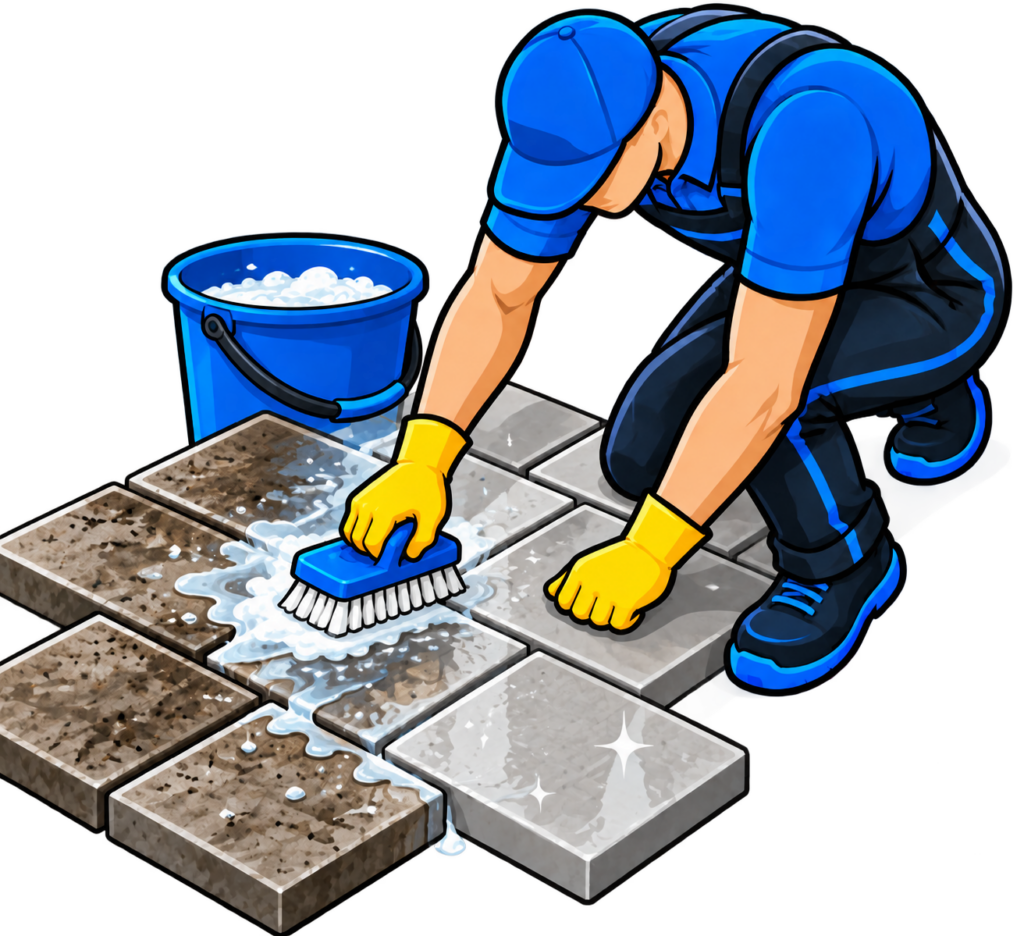
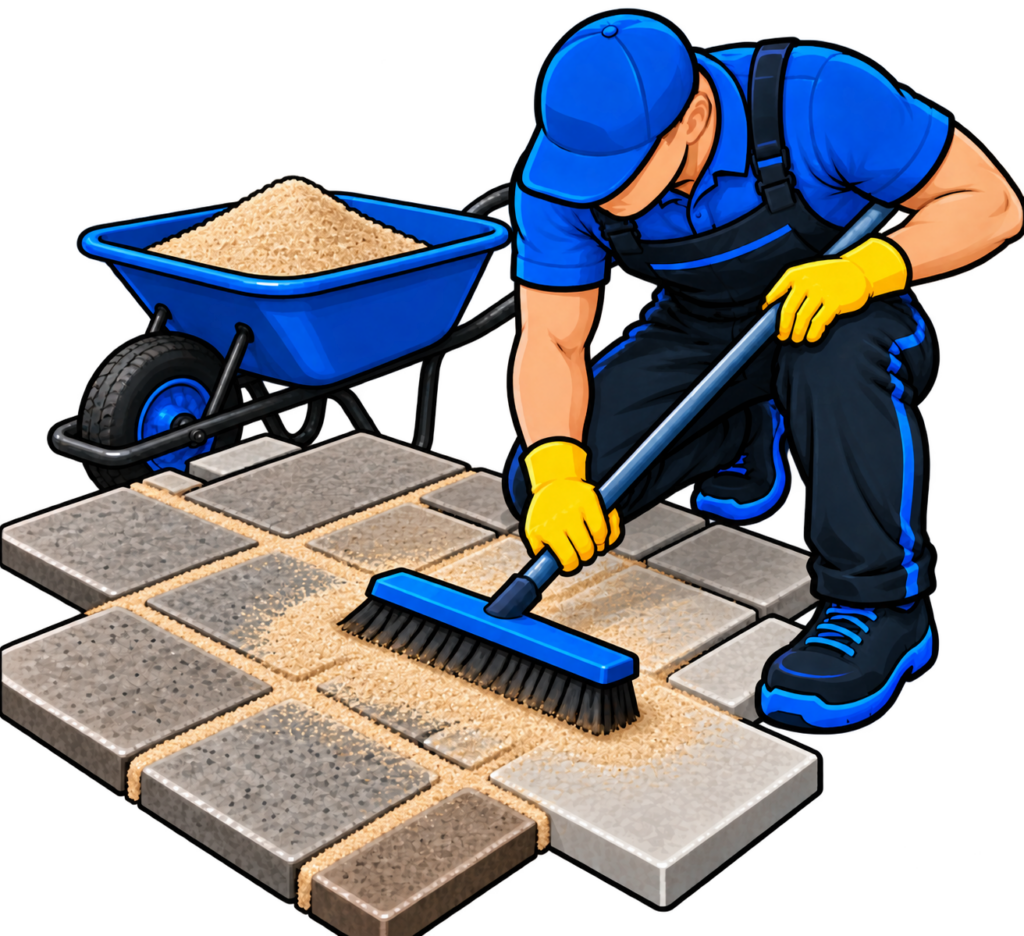
Sealer locks in whatever is on the surface, so the surface has to be right first. Algae, sunscreen residue, rust from irrigation water and tannin stains are dealt with before anything else. The problem that matters most is efflorescence, the white haze that comes up through pavers and stone.
Joint sand and why it matters
Choosing the sealer
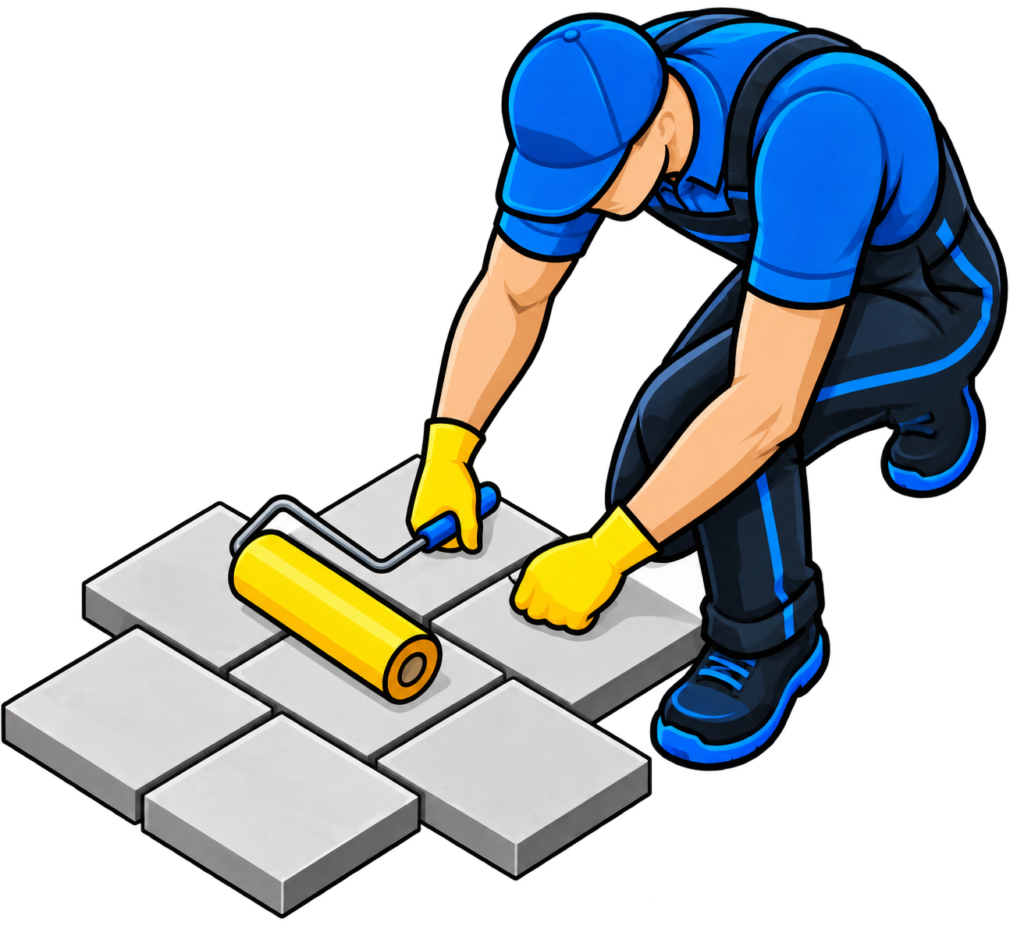
There is no single best product. The right one depends on the surface, how much sun it takes and the look you want.
- Penetrating sealers: soak into the paver or stone and leave no surface film. They keep a natural look and suit travertine where you want the stone to look like stone. They add less color depth.
- Film-forming sealers: sit on top of the surface, deepen color and can give a satin or gloss finish. They show wear as they age, and trapped moisture can cloud some of them.
- Solvent-based products: tend to give a richer, wetter look and have stronger fumes and tighter application windows.
- Water-based products: have less odor, which counts on a lanai next to living space, and usually give a more subtle finish.
Traction and heat underfoot
No honest contractor can call a wet pool deck slip-proof, and we will not. Any smooth surface gets slick when it is wet, and algae or sunscreen film makes it worse. Traction is affected by:
- the natural texture of the paver or stone
- the sealer finish, since gloss is smoother than satin or matte
- algae, biofilm and sunscreen residue building up
- standing water from poor drainage
- wear on the surface over time
The options are a lower-sheen finish, keeping the surface clean, and in some cases a texture additive mixed into the sealer. An additive adds grip but does not make a surface slip-proof, and it changes how the deck looks and feels. If someone in your house has balance problems, tell us and we will talk through what else is worth doing.
Enclosure posts, drainage and pool chemistry
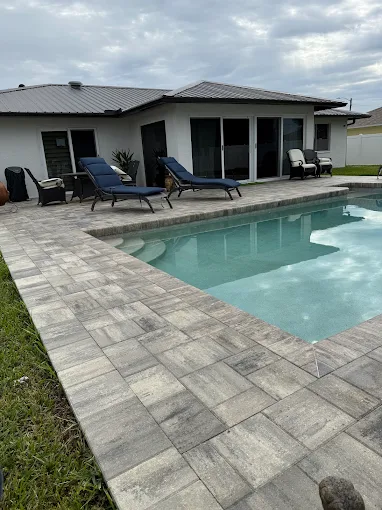
The base of every screen enclosure post is where water sits, so it is where staining and corrosion start. Sealer has to be cut in cleanly around posts, tracks, drains and pool coping. Drainage matters just as much. Water that pools on a deck feeds algae, efflorescence and staining, and sealing cannot fix a deck that does not drain. We will tell you if that is your problem.
Chlorine and salt systems add another layer. Travertine is calcium-based and reacts to acids, so pool chemicals and some cleaning products can etch it. Salt from splash-out can also work into stone. A good seal slows absorption but does not stop it. Balancing the pool water is your pool service’s job, not ours.
What efflorescence is
What makes this different from Dock and Seawall Cleaning
| Pool Deck and Lanai Sealing | Dock and Seawall Cleaning | |
|---|---|---|
| Surface | Pavers and travertine around the pool and under the lanai | Docks and seawall surfaces on the waterfront |
| Goal | Protect the surface and set its finish and traction | Remove algae, salt film and marine growth |
| Work | Clean, treat efflorescence, joint sand, apply sealer | Cleaning only, no sealer |
When it is the right answer and when it is not
It is the right answer when
The deck is stained, faded or blotchy from sun, chemicals and irrigation water
It is not the right answer when
Pavers have settled, cracked or lifted, since that is a base and re-laying problem and sealer will not hold it together
Efflorescence is still actively coming up and the moisture source has not been found
You want a guarantee the surface will never be slippery, which nobody can honestly give
Reviews From Happy Homeowners
Our customers share their experience with quality workmanship, honest recommendations, and lasting exterior improvements.
How we do the work
1
Walk-through and written estimate
2
Cleaning and stain treatment
3
Joint sand
4
Sealing
5
Cure and handover
You get clear guidance on when the deck can be walked on and used, care notes for the surface
What it costs
Pool deck and lanai sealing usually runs per square foot. Where you land in that range depends on:
- Surface: Travertine and concrete pavers are different jobs with different products
- Condition: Heavy staining, efflorescence or missing joint sand adds preparation
- Size and layout: A deck broken up by posts, planters and steps takes longer than an open one
- Sealer: Penetrating, film-forming, solvent-based and water-based products differ in price and finish
Estimates are free and written, so you see the figure before any work starts.
Sealing is not a one-time cost, and no seal lasts a set number of years. On an exposed Southwest Florida deck, many seals need attention every two to four years, and sooner where the sun is direct, rain runs across the surface all summer, salt air reaches the deck or the product was a light one. A covered lanai usually holds up longer. What moves the interval is the surface, the exposure and the product, so we give you a realistic figure for your deck rather than a number from a brochure.
Where we do this work
Spotless Solution serves 29 communities across Lee County, all within roughly 20 miles of Cape Coral. This one page covers the whole area, so here is where this work tends to come up and why.
- Cape Coral: Many pool homes, most of them on canals. Salt air, tannin from landscaping and irrigation iron all show up on decks here.
- Fort Myers and North Fort Myers: A mix of older pool decks with worn sealer and joint sand washed out.
- Newer gated communities: This is where travertine concentrates. It is a softer, acid-sensitive stone, so it needs a different product and approach from concrete pavers.
- Lochmoor, St. James City and Matlacha: Closest to open water, so salt exposure is highest and seals wear faster. These are also the areas where dock and seawall cleaning is most often requested.
Common Questions
Will a sealed pool deck be slip-proof?
How often does a pool deck need resealing?
Can you seal over the white haze on my pavers?
Does a saltwater pool change what you use?
Do you also do dock and seawall work?
Get a free estimate
If your pool deck or lanai is stained, losing joint sand or has never been sealed, call Spotless Solution LLC at 239-341-9788. We will look at the surface, tell you what it needs and what it does not, and put the price in writing. Owner operated, based in Cape Coral, serving Lee County.